






AI Copilots Transforming CRM Workflows for Revenue
AI Copilots, CRM Workflows, Automation Tools, Customer Relationship Management, AI Integration, Business Efficiency
AI Copilots Are Redefining Modern CRM Workflows for Revenue Teams
AI Copilots are no longer sidekicks inside Customer Relationship Management platforms; they are becoming the operational brain of CRM workflows. For agencies and growth-focused businesses, they represent a shift from manual pipeline management to AI‑first, revenue‑orchestrated systems. LeadMagno positions AI Copilots not as shiny tools, but as structured levers for predictable acquisition, retention, and expansion. When paired with a modern digital consultancy partner, these copilots serve as the connective tissue among strategy, execution, and measurable revenue outcomes.
Why It Matters: From Logging Activities to Orchestrating Journeys
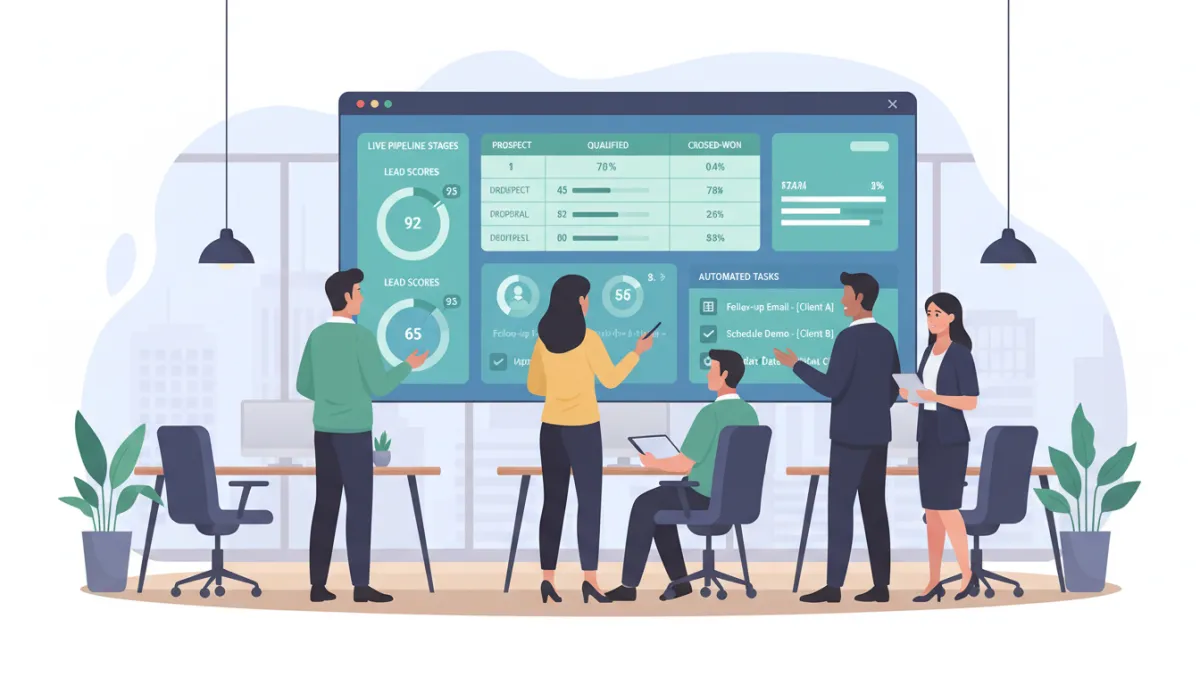
By 2026, AI‑first CRMs are becoming the norm, with agentic AI resolving up to 80% of routine customer queries and automating large portions of sales prep and follow‑up. According to Gartner, AI‑driven CRM Automation Tools are cutting prospecting and preparation time by more than 50%, while AI agents become embedded in up to 40% of enterprise applications. This is not incremental efficiency; it is a redesign of how revenue operations function daily.
📌 Key Takeaway: The real upside is not “doing the same work faster,” but changing what work gets done at all—shifting humans from logging and chasing to diagnosing, designing offers, and steering strategy.
Core Strategies for AI Copilots in CRM Workflows
LeadMagno sees winning teams converging on four core strategies:
AI‑first design: Build CRM Workflows assuming AI handles intake, triage, and routing, with humans focusing on judgment and relationship‑building. Platforms like GoHighLevel give RevOps teams the building blocks to design AI‑centric flows rather than bolting AI onto legacy processes.
Precision selling: Use AI Copilots to interpret signals, score intent, and recommend next‑best actions across the funnel. When combined with a focused content marketing strategy, copilots can prioritize leads consuming high‑intent assets and personalize outreach accordingly.
Unified workspaces: Centralize email, calls, chat, and campaign data so the copilot can operate across channels, not inside silos. For example, a unified inbox and pipeline in GoHighLevel’s Pro trial lets copilots see ad clicks, social DMs, and sales calls in one place.
Trust‑by‑design: Bake transparency, approvals, and human review into AI Integration to close the widening “trust gap” between brands and customers. LeadMagno’s MagnoPro operating system treats trust controls—like approval queues and explainable logs—as first‑class workflow objects, not afterthoughts.
💡 Pro Tip: Don’t start with “Where can we add AI?” Start with “Where are we losing revenue because humans are stuck in low‑value work?” Then redesign those workflows AI‑first.
A Real-World AI Copilot Workflow: From Lead to Renewal
To see how this works in practice, consider a B2B services agency using GoHighLevel’s AI suite and LeadMagno’s copilot playbooks to manage their full revenue cycle:
Traffic & intent capture: Prospects engage with SEO content and paid campaigns built from a unified content strategy blueprint. UTM parameters and form fills flow automatically into the CRM.
AI-led qualification & routing: An AI copilot scores leads based on page depth, content consumed, firmographic data, and social engagement (from coordinated social media marketing campaigns). High‑intent leads are routed to sales, while mid‑intent leads enter nurture tracks.
Conversation orchestration: The copilot drafts personalized emails, LinkedIn follow‑ups, and SMS reminders, tuned to the prospect’s use case. Reps review and approve in seconds instead of writing from scratch.
Meeting prep & call intelligence: Before discovery calls, the copilot summarizes all prior touchpoints, website behaviour, and similar customer wins from the CRM. During calls, it suggests questions and tags risks in real time.
Proposal & follow‑up: Post‑call, the copilot generates a tailored proposal draft, follow‑up sequence, and internal notes. It tracks stakeholder engagement with the proposal and nudges the rep when decision‑makers are active.
Onboarding & retention: Once closed, the same copilot orchestrates onboarding tasks, sends proactive health‑check surveys, and flags churn risk based on sentiment and product usage—feeding into a local visibility operating system for ongoing upsell and advocacy.
Before/After: How AI Copilots Transform CRM Workflows
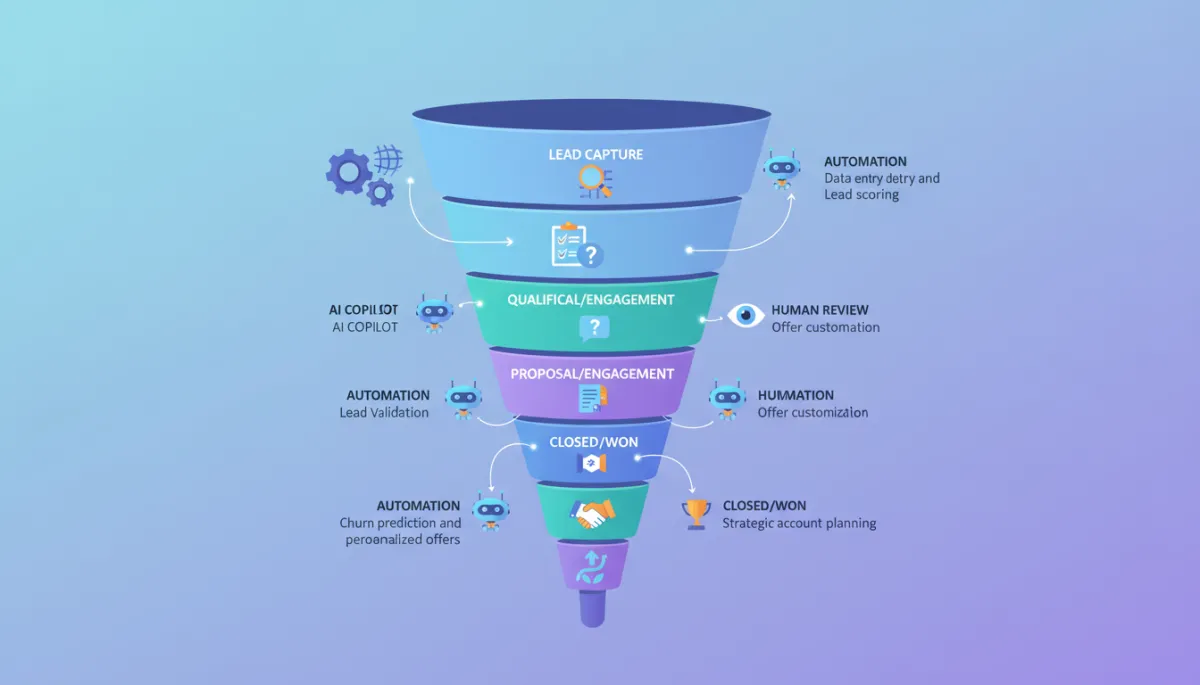
Traditional CRM (Before)AI-First CRM with Copilot (After)Reps manually log calls, emails, and notes—often days late or not at all. Copilot auto‑summarizes every interaction into structured fields and next steps. Lead follow‑up depends on the individual discipline; many hot leads go cold. AI sequences trigger instantly based on behaviour, with human review at key steps. Forecasts rely on gut feel and inconsistent pipeline hygiene. Copilot scores deals, highlights risk, and updates probabilities based on real behaviour. Customer success reacts to churn after it happens. AI flags early churn signals and orchestrates save plays and expansion offers.
Execution Methods: From Concept to Daily Use
Practically, execution starts with mapping existing CRM Workflows: lead capture, qualification, handoff, deal management, onboarding, and renewal. LeadMagno then identifies “AI‑ready” steps such as data entry, enrichment, follow‑up scheduling, and content drafting. Copilots are configured to:
Summarize calls and emails directly into Customer Relationship Management records.
Auto‑propose next steps and outreach templates based on stage, persona, and sentiment.
Trigger Automation Tools to run nurture sequences or create tasks when key signals appear.
💡 Pro Tip: Treat each workflow like a product. Define its goal (e.g., “SQL rate from MQLs”), instrument it end‑to‑end, then let the copilot iterate messaging, timing, and channels based on conversion data.
Systems & Operations: Making AI Copilots Reliable
Operationally, AI Copilots must be treated as system components, not add‑ons. LeadMagno recommends a clear operating model: who owns prompt libraries, who approves workflow changes, how releases are tested, and how frontline teams request improvements. SLAs should define when AI can act autonomously and when human sign‑off is mandatory, especially for pricing, discounts, and sensitive communications.
Clarifying RevOps Ownership & Governance
Contrarian insight: AI copilots should not “belong” to IT or marketing. They should be owned by Revenue Operations (RevOps) as a core part of the commercial engine.
RevOps as product owner: RevOps defines the backlog of copilot use cases, success metrics, and rollout plans, aligning them with pipeline, ACV, and NRR targets.
Sales & CS as co-designers: Frontline teams provide feedback on prompts, tone, and edge cases, but RevOps controls the configuration in tools such as GoHighLevel SaaS mode or MagnoPro.
IT & security as guardians: They set data boundaries, access policies, and integration standards, but do not own the commercial roadmap.
📌 Key Takeaway: If RevOps doesn’t own your AI copilots, you’ll get technically impressive demos that never translate into pipeline, win‑rate, or NRR lift.
Data & Measurement: Turning AI into a Revenue Asset
AI Copilots are only as strong as the data they consume. Clean account hierarchies, standardized fields, and consistent activity logging are prerequisites. LeadMagno advises defining a measurement spine: time‑to‑response, meeting‑set rate, stage conversion, cycle length, and net revenue retention. AI‑specific KPIs—such as percentage of tasks automated, AI‑assisted win rate, and sentiment‑based churn prediction accuracy—should be monitored monthly and tied to commercial outcomes, not just productivity anecdotes.
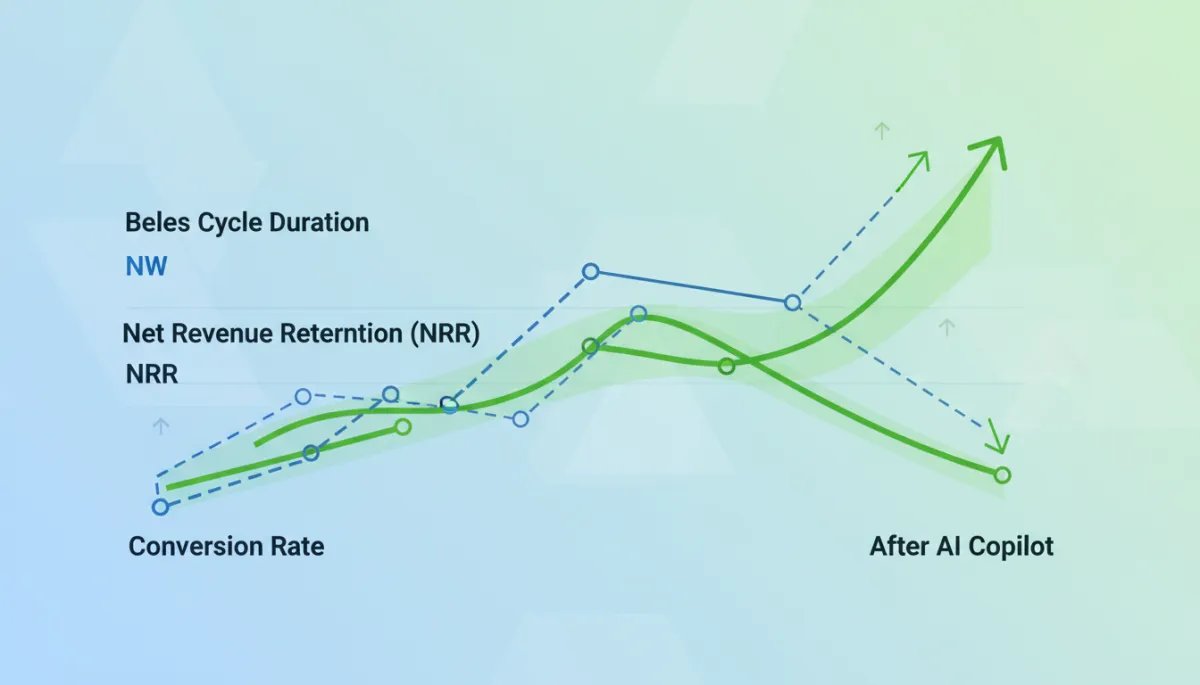
Beyond Productivity: Revenue Impact Levers
Top-of-funnel conversion: AI‑personalized follow‑ups for inbound leads often increase MQL-to-SQL conversion by 15–30% when combined with a coherent marketing strategy session.
Mid-funnel velocity: Copilot‑driven reminders, micro‑offers, and multi‑threading reduce sales cycle length and increase stage‑to‑stage progression—especially in complex B2B deals.
Expansion & retention: AI‑detected usage patterns and sentiment flags enable targeted cross‑sell plays and save motions, lifting NRR and lowering churn.
Risks & Governance: Controlling the Copilot
As AI Integration deepens, governance becomes strategic. Key risks include hallucinated recommendations, biased scoring, over‑automation that erodes human rapport, and regulatory exposure around data usage. LeadMagno advocates a governance framework with four pillars: role‑based access, explainable decision logs, periodic bias audits, and clear escalation paths when AI output conflicts with policy or customer expectations.
⚠️ Warning: Over‑automating revenue workflows without explicit human checkpoints in pricing, discounts, or contract language can create legal and brand risk that dwarfs any short‑term efficiency gain.
AI Implications and Future-State Thinking
Looking toward 2026 and beyond, AI Copilots will evolve from assisting individual reps to orchestrating cross‑channel experiences, integrating with commerce protocols, IoT signals, and external data sources. Agentic AI will predict needs, negotiate micro‑offers, and coordinate service across partners. Brands that succeed will pair this automation with a human‑centric experience, recognizing that most customers still expect interactions to feel personal, transparent, and optional—not forced through bots.
Toward Autonomous Revenue Operations
Autonomous revenue operations do not mean “no humans in sales.” They mean humans set the strategy and guardrails, while AI runs the playbook in real time:
Dynamic pricing and packaging based on live demand, cohort behaviour, and competitor signals.
Always‑on experimentation where AI tests copy, offers, and touch patterns across segments and rolls out winners automatically.
Self‑optimizing routing that assigns accounts to reps and success managers based on fit, bandwidth, and historical outcomes.
“The endgame is a revenue engine where humans decide what to pursue and why, and AI continuously optimizes how it gets done.”
LeadMagno’s Final Framework for AI-First CRM Workflows
LeadMagno distills AI‑powered Customer Relationship Management into a simple framework: Map → Automate → Orchestrate → Govern → Optimize. Map current journeys and pain points; Automate low‑judgment tasks with AI Copilots; Orchestrate multi‑channel CRM Workflows around clear revenue goals; Govern with policies, oversight, and transparency; Optimize continually using performance and sentiment data. This turns AI Integration from experimentation into a repeatable commercial engine for agencies and businesses.
Executive Diagnostic: Are You Ready for AI-First RevOps?
Leaders can quickly assess their readiness by asking:
Do we have a single owner (RevOps) accountable for AI copilots and CRM workflows?
Can we reliably measure conversion, velocity, and retention at each funnel stage today?
Do we have at least one “AI‑ready” workflow mapped end‑to‑end with clear guardrails?
Are our teams trained to collaborate with AI (review, approve, escalate), not just “use a new tool”?
💡 Pro Tip: If you answer “no” to two or more, start with a focused pilot alongside a partner like We Solve’s digital consultancy or a guided GoHighLevel bootcamp before scaling.
Implementation Case Study: From Chaos to Copilot-Driven Growth
A regional marketing agency came to LeadMagno with a familiar problem: thousands of inbound leads across forms, DMs, and calls, but inconsistent follow‑up and flat revenue. Using MagnoPro on top of GoHighLevel’s annual plan, they implemented an AI copilot across their funnel.
Before: 35% of leads never contacted; manual lead assignment; reps writing every email from scratch; no clear view of which campaigns drove revenue.
After 90 days: AI copilots handled 80% of first‑touch outreach, auto‑assigned leads based on fit and capacity, and generated call summaries and follow‑ups. MQL → SQL conversion increased by 27%, average sales cycle shortened by 18%, and logo churn dropped by 12% due to proactive renewal plays.
Critically, the agency did not add headcount. The gains came from conversion and retention improvements—not just “doing the same work faster.” They used LeadMagno’s demo blueprint to roll out one workflow at a time and validate impact before expanding.
FAQs: AI Copilots in CRM for Businesses & Agencies
Q1. Where should we start with AI Copilots in our CRM?
Begin with one high‑volume workflow—such as lead qualification or support triage—where outcomes are easy to measure, and risk is low. Prove value, then expand. Consider pairing your first workflow with a structured GoHighLevel upgrade path or a targeted content strategy, so you’re testing AI against a clear, measurable funnel.
Q2. Do AI Copilots replace our sales or account teams?
No. They offload repetitive tasks and surface insights so humans can spend more time on strategy, negotiation, and relationship management. The highest‑performing teams use copilots as force multipliers, not headcount replacements.
Q3. How fast can we see a measurable impact?
Many organizations see improvements in response times and meeting‑set rates within 60–90 days, provided data hygiene, training, and governance are in place from day one. To accelerate the curve, some pair their rollout with a time‑boxed Pro trial or a dedicated AI add‑on so they can iterate quickly without disrupting core systems.
📌 Strategic Thesis: Over the next three years, the competitive gap in most markets will not be between “AI users” and “non‑users.” It will be between organizations that treat AI copilots as a RevOps‑owned revenue system—designed, governed, and optimized like a product—and those that treat AI as a scattered set of tools. The former will compound advantages in conversion, expansion, and retention; the latter will be stuck chasing productivity anecdotes.


Facebook
Instagram
X
LinkedIn
Youtube
TikTok