






AI CRM Integration: Transforming Business in 2026
AI CRM Integration, Business Automation, Digital Transformation
Why Businesses Are Adding AI to CRM Platforms in 2026
Revenue leaders are under pressure to grow pipeline, improve conversion, and protect margins—without adding headcount. Yet most Customer Relationship Management (CRM) systems still function as passive databases, not active growth engines. The result is a familiar pattern: inconsistent follow-up, underused data, and sales teams spending more time updating records than talking to customers. AI CRM Integration is emerging as the answer, turning CRMs into autonomous, insight-driven systems that execute work, not just record it.
What Is AI CRM Integration?
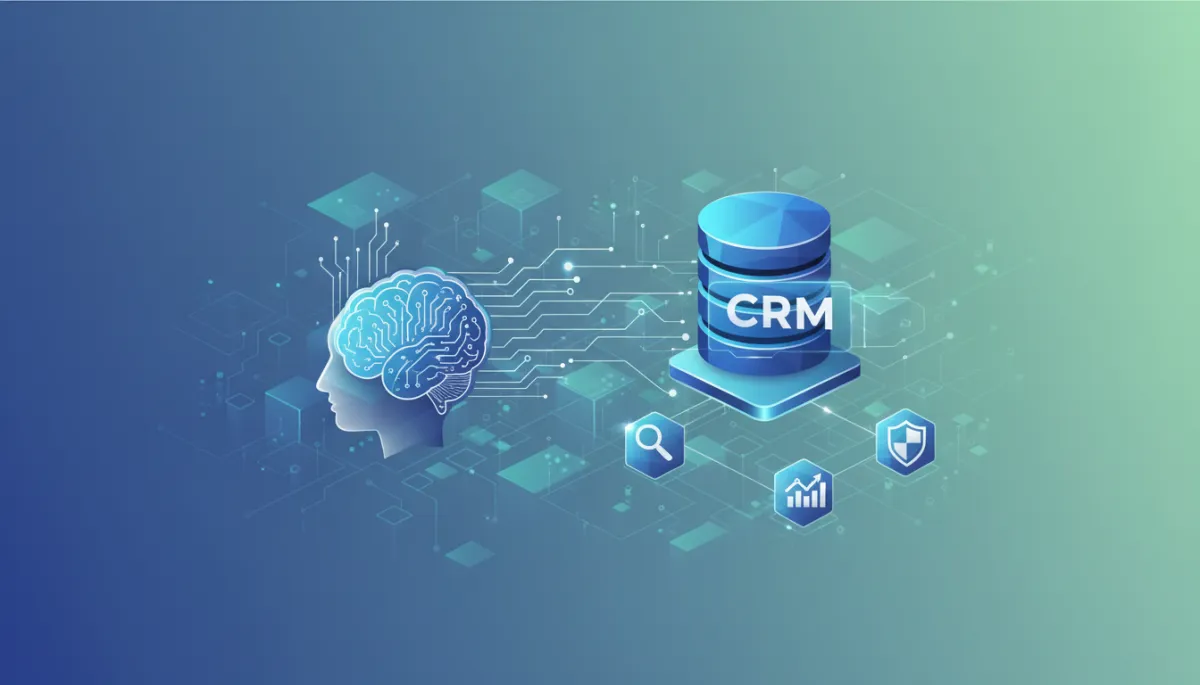
Definition:AI CRM Integration is the embedding of artificial intelligence models, agents, and automations directly into CRM platforms so they can analyze data, make decisions, and autonomously execute customer-facing and internal workflows across sales, marketing, and service.
One-line summary: AI CRM Integration turns your CRM from a static database into an always-on, decision-making engine that drives lead generation, customer engagement, and revenue operations.
Quick Summary: Key Strategies and Insights
If you want more qualified pipeline → focus on AI-driven lead scoring and routing that prioritizes sales-ready opportunities.
If you want higher conversion rates → deploy agentic AI playbooks for next-best action, follow-up, and personalized outreach.
If you want scalable customer service → integrate autonomous AI agents that resolve routine queries end-to-end [1].
If you want trusted AI insights → invest first in data quality, governance, and unified architecture [2][3].
💡 Pro Tip: Start with one high-value workflow—such as AI-qualified leads into an automated nurture sequence—before scaling to full-funnel Business Automation. Platforms like LeadMagno and AI-enabled systems such as HighLevel AI are designed for this phased approach.
Why Businesses Are Adding AI to CRM Platforms (Why It Matters)
The business case is now quantifiable. In 2026, 64% of CRM platforms have AI integrated, with AI-enabled CRMs generating about $13.50 ROI per $1 invested versus $8.71 for non-AI implementations [2]. Organizations report a 34% lift in sales productivity and a 42% improvement in lead scoring accuracy when AI is embedded into Customer Relationship Management workflows [2]. At the same time, autonomous agents such as Freshworks’ Freddy AI can resolve up to 80% of customer queries without human intervention [1].
Strategically, AI CRM Integration supports digital transformation by shifting from manual, reactive processes to proactive, AI-driven insights. In a market where the CRM sector is expected to grow from $101 billion in 2026 to $145 billion by 2029 [2], organizations that fail to embed AI risk higher acquisition costs, slower response times, and lower customer satisfaction than AI-enabled competitors.
Core Strategies for AI CRM Integration
AI-driven lead generation strategies: Use predictive models to identify high-intent prospects, enrich profiles, and trigger automated outreach sequences. AI-native tools can analyze behavior across web, email, and social to surface sales-ready accounts [1][3].
Precision selling and next-best action: Platforms like SugarAI focus on precision selling—surfacing which deals, renewals, and upsell opportunities to prioritize, and what action to take next [1].
Agentic AI workflows: Move beyond suggestions to autonomous execution. ServiceNow’s autonomous CRM and Microsoft’s agentic contact center exemplify AI agents that can configure quotes, update records, and orchestrate multi-step workflows in real time [3].
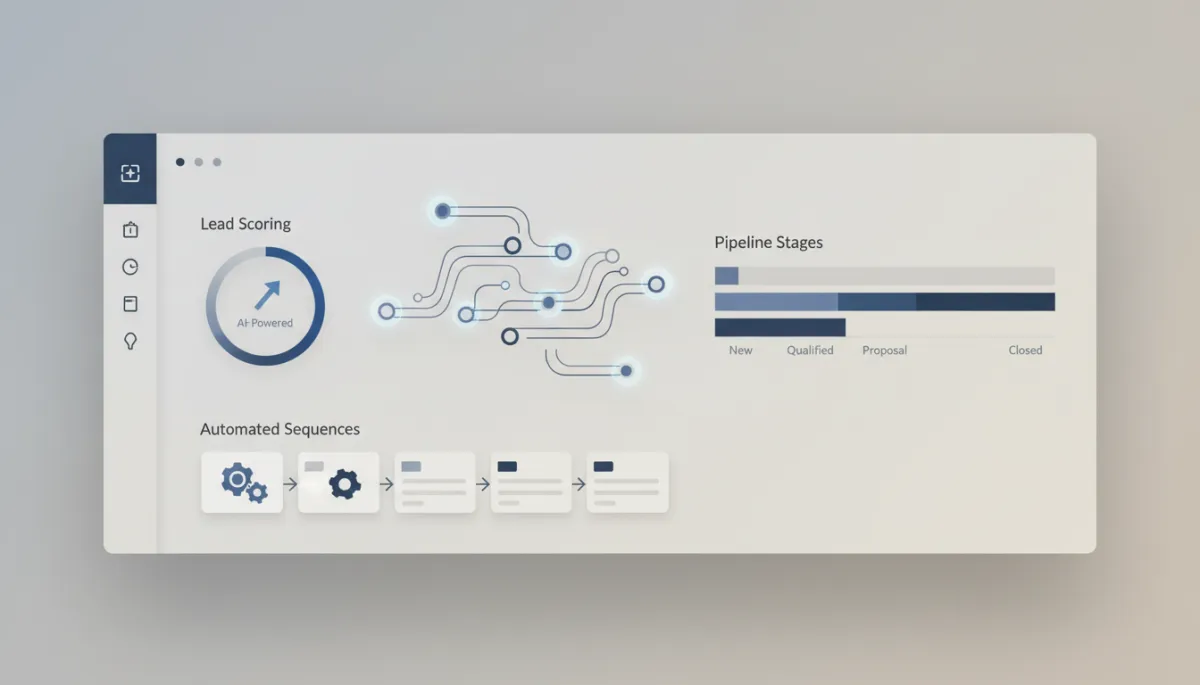
AI-scored leads and automated playbooks consistently increase conversion rates and sales velocity.
Execution Methods: From Pilot to Scale
Define the primary business outcome. For example, “Increase qualified opportunities by 20% in six months” or “Reduce first-response time by 40%.”
Select a focused use case. Common entry points: AI lead scoring, AI email and SMS follow-up, or AI-powered service triage. This is where tools like LeadMagno’s demo-driven onboarding can accelerate design and deployment.
Embed AI in existing workflows. Rather than forcing teams into new tools, integrate AI into the CRM views and automations they already use. Solutions such as HighLevel’s AI suite are designed to sit inside daily sales and marketing workflows.
Iterate based on measurable impact. Run A/B tests on AI versus non-AI flows, comparing response times, win rates, and customer satisfaction.
Decision block: If you want fast time-to-value, do a narrow, high-impact AI pilot (like AI-qualified inbound leads) instead of attempting a full CRM replatform on day one.
Systems & Operations: Architecting for AI-Driven CRM
AI CRM Integration works best in a composable architecture where CRM, marketing automation, contact center, and data platforms are connected via APIs. In 2026, leading vendors are re-architecting around agentic AI, moving away from rigid REST-only integrations to support contextual reasoning over conversations, events, and profiles [1]. Practically, this means:
Centralizing customer data in the CRM or CDP layer.
Using integration-first tools (iPaaS, native connectors) to link marketing, billing, and support systems.
Standardizing processes so AI agents can reliably execute tasks end-to-end.
Data & Measurement: Turning AI-Driven Insights into Decisions
Despite growing AI adoption, 45% of CRM users report their data is not ready for AI [2]. High-performing teams treat data as a product: defining ownership, quality rules, and access patterns. Measurement focuses on:
Revenue metrics: pipeline generated, win rate, average deal size.
Efficiency metrics: time-to-first-touch, handle time, automation coverage (% of tasks executed by AI).
Experience metrics: NPS, CSAT, and qualitative feedback on AI interactions [3].
Decision block: If you want reliable Ai-driven insights, prioritize data cleansing and governance before scaling advanced automations or generative content.
Risks & Governance: Controlling AI in Customer Relationship Management
Research highlights clear barriers to AI CRM Integration: data quality issues, lack of expertise, resistance to change, and governance gaps [3]. Customers themselves are divided—only 22% see AI as clearly beneficial, while many express concerns about empathy, accuracy, and privacy [3]. To mitigate risk:
Establish AI usage policies (where AI can act autonomously vs. requiring human approval).
Implement human-in-the-loop review for high-risk communications and decisions.
Monitor bias, hallucinations, and compliance risks, especially in regulated sectors.
FAQs: AI CRM Integration for Business Leaders
Does AI replace my sales or service teams? No. In 2026, the most effective deployments augment humans—handling repetitive tasks and surfacing insights—while people focus on complex, high-value interactions [1][3].
How quickly can we see ROI? With a clear use case and clean data, organizations often see measurable gains in 60–90 days, especially in lead conversion and response times [2]. Booking a structured implementation path via LeadMagno’s demo can shorten this timeline.
Do we need to change CRM platforms? Not always. Many teams layer AI-first tools (like HighLevel’s AI CRM capabilities) on top of existing systems, then evolve toward more AI-native stacks over time.
Final Operating Model: Connecting Systems, Priorities, and Execution
A mature AI CRM Integration model connects four layers: a unified data foundation, a CRM at the center of Customer Relationship Management, AI agents and models orchestrating Business Automation, and human teams governing and refining Ai-driven insights. Priorities are set from the top down—revenue, efficiency, and experience—while execution is continuously optimized from the bottom up through experimentation and feedback.
If you want a practical path forward, start with a single, measurable workflow; integrate AI into your existing CRM; instrument it for data and measurement; and evolve governance as automation scales. Done well, AI CRM Integration becomes less a one-time project and more an operating system for digital transformation—compounding value across every lead, interaction, and relationship.


Facebook
Instagram
X
LinkedIn
Youtube
TikTok