





AI in CRM: Boosting Lead Generation for SMBs
AI in CRM, Lead Generation, Small Business Marketing
AI in CRM: The New Competitive Infrastructure for Lead‑Driven SMBs
For small and medium businesses that live or die by lead flow, the game has changed. Rising ad costs, noisy inboxes, and longer buying journeys mean you can’t just “add more leads” and hope for the best. The real advantage in 2026 is invisible: an AI‑powered CRM infrastructure that quietly scores, routes, nurtures, and learns from every interaction. This article unpacks what that actually means—and how marketers and owners can use it without needing a data science team.
What Is AI in CRM—In Plain Language?
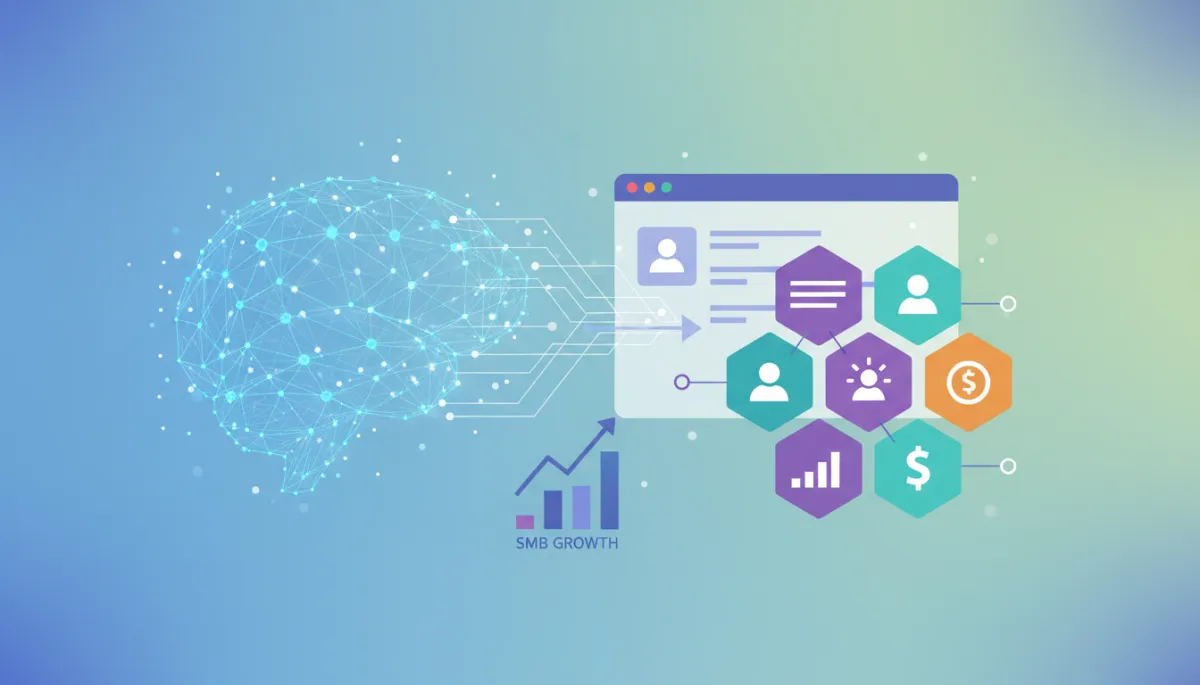
AI in CRM means your customer relationship management system doesn’t just store data—it actively thinks with you. It uses machine learning and generative AI to score leads, predict which deals are at risk, draft outreach, and trigger workflows across marketing, sales, and service. Instead of being a passive database, your CRM becomes a proactive copilot that keeps deals moving and conversations relevant. In one sentence: AI in CRM is the intelligent layer that turns your contact list into a living, learning growth engine.
The Industry Reality: Challenges and Emerging Trends
If you run lead generation or performance marketing, you’re likely facing:
Lead volumes are rising, but conversion rates are flat or declining.
Reps cherry‑picking “easy” leads while good ones go cold in the CRM.
Messy data, duplicate records, and no clear view of ROI by channel.
At the same time, trends are moving fast. By 2026, around 72% of small businesses will use a CRM, and over half will be investing in AI technology. Gartner expects 40% of enterprise apps to embed task‑specific AI agents by the end of 2026, and SMB tools are following quickly. Platforms like Salesforce’s Agentforce, HubSpot’s AI, and Freshsales’ Freddy Copilot are turning CRMs into proactive workspaces rather than static lists.
Quick Strategic Snapshot for SMBs and Marketers
What matters most: Clean data, clear ICP definitions, and simple AI‑driven workflows that support your actual sales process.
Recent changes: AI lead scoring, sentiment‑aware follow‑ups, and autonomous agents are now built into mainstream CRMs, not just enterprise stacks.
Common mistakes: Treating AI as a “magic add‑on” instead of fixing process and data first; buying too many tools and creating “agent sprawl.”
Strategic opportunities: Precision lead routing, always‑on nurturing, and pipeline health monitoring that lets small teams punch above their weight.
Focus areas: Systems & operations, data & measurement, and lightweight governance, so AI is powerful but controlled.
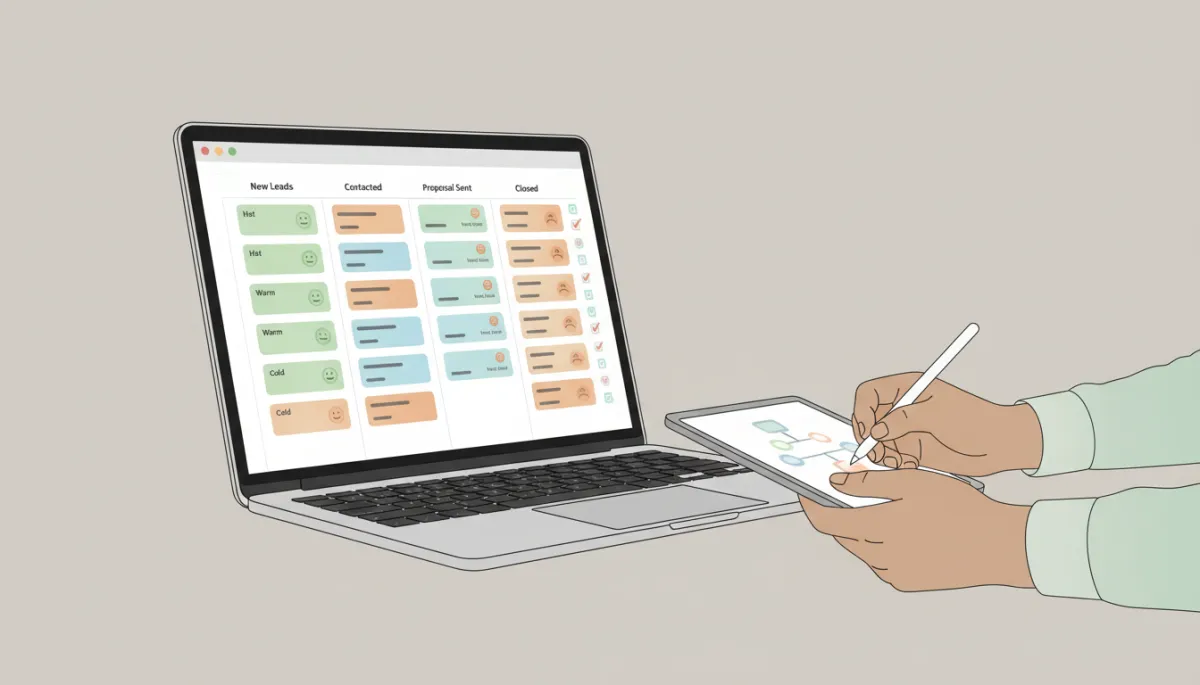
AI scoring and automation help small teams focus on the 20% of leads that drive most revenue.
Why AI in CRM Now Functions as Infrastructure
Think of AI in CRM like electricity in your office: invisible, but everything stops without it. As more than 50% of SMBs deploy AI agents for automation—with reported efficiency gains of 30–90%—the baseline for “normal operations” is rising. If your competitors’ CRMs automatically protect stalled deals, personalize follow‑ups, and surface the next best action, your manual spreadsheet process isn’t just slower; it’s strategically obsolete.
Core Strategies: A Simple 3‑Layer Framework
To keep this practical, use a three‑layer view: Data → Decisions → Delivery. Ask yourself these micro‑questions as you design your stack.
1. Data & Measurement: Are We Feeding AI the Right Signals?
AI only scales what’s already there. If your CRM is full of half‑completed fields and outdated contacts, AI will confidently prioritize the wrong leads. In 2026, KPMG reports that over half of CRM investments are going into AI and automation—but leaders are also doubling down on data hygiene and governance. For SMBs, that means:
Standardizing lead sources, lifecycle stages, and definitions of “qualified.”
Logging key activities (opens, replies, meetings, intent signals) consistently.
Setting up simple dashboards: conversion by source, speed‑to‑lead, and pipeline risk.
2. Decisions: How Do We Want AI to Think?
Here’s where embedded AI shines: lead scoring, deal health, and next‑best‑action recommendations. Many CRMs now offer out‑of‑the‑box models tuned for B2B or B2C. Your job is to tell the system what “good” looks like:
Which industries, company sizes, or behaviours correlate with closed‑won?
What does a “healthy” deal look like at each stage—touches, time in stage, stakeholders?
A contrarian insight: the goal isn’t a “perfect” AI score. It’s a useful ranking that helps humans prioritize. Many teams over‑optimize models and under‑invest in coaching reps to actually follow the AI’s guidance.
3. Delivery: How Does AI Show Up in Daily Work?
For marketers and owners, the magic is in execution methods: automated sequences, smart routing, and AI‑written messages that still sound like you. Modern CRMs now:
Auto‑assign hot leads based on territory, capacity, or specialization.
Trigger nurture journeys when deals stall—without marketing having to build a new campaign every time.
Generate personalized follow‑ups and call summaries using conversation intelligence.
Real‑World Example: From Manual Chaos to AI‑Driven Pipeline
Imagine a 15‑person B2B services agency generating 600+ leads a month from paid ads, webinars, and referrals. Before AI in their CRM, reps worked from spreadsheets, response times averaged 18 hours, and only about 12% of MQLs turned into opportunities. After rolling out AI lead scoring, automated speed‑to‑lead routing, and sentiment‑based follow‑ups, they:
Cut the average first response to under 30 minutes using AI‑drafted replies and call tasks.
Saw opportunity conversion rise toward the 3.8–4.8× ROI benchmarks reported for AI scoring and pipeline optimization.
Freed ~5–6 hours per rep per week previously spent on data entry and manual follow‑ups.
The key wasn’t fancy prompts—it was aligning AI with a clear ICP, a simple sales process, and disciplined measurement.
Risks, Governance, and a Common Myth
A popular myth is that “AI will replace sales and marketing roles.” In reality, 2026 is about fusion: AI handles routine tasks; humans handle nuance, negotiation, and relationships. The real risk isn’t replacement—it’s unseen errors at scale. Without basic governance, AI can:
Over-emailing good accounts hurts deliverability and brand perception.
Embed bias into lead scoring (e.g., favouring certain industries or regions without justification).
Light‑touch governance for SMBs can be as simple as: monthly audits of AI‑generated content, clear approval rules for new workflows, and a named “AI owner” who reviews metrics and exceptions.
FAQs: AI in CRM for Lead Generation & Marketing
1. Is AI in CRM worth it for a small team of 3–5 people?
Yes. Even tiny teams benefit from AI‑assisted data entry, lead scoring, and follow‑ups. Studies show SMBs save several hours per user per week and see 3–4× ROI from automation alone, which compounds as you grow.
2. Do I need perfect data before turning on AI features?
No—but you do need consistent data. Start by cleaning core fields (email, company, stage, source) and defining what “qualified” means. Then let AI learn and improve with you, rather than waiting for perfection.
3. Will AI make my outreach sound robotic?
Not if you set guardrails. Train your CRM’s AI on your best emails, add tone guidelines, and keep humans in the loop for key messages. The goal is “you on your best day,” not generic templates.
4. How do I measure success beyond vanity metrics?
Track conversion rates by lead source, time‑to‑first‑touch, pipeline velocity, and win rate for AI‑prioritized leads vs. others. If those move in the right direction, your AI infrastructure is working.
5. What’s the first AI feature I should turn on in my CRM?
For most SMBs, start with AI lead scoring and basic follow‑up automation. These directly impact revenue and are easier to understand than complex predictive models or full autonomous agents.
Final Strategic Takeaway
AI in CRM is no longer a shiny add‑on; it’s becoming the competitive infrastructure layer for lead‑driven small and medium businesses. The winners won’t be those with the fanciest models, but those who connect strategy and execution: clean data, clear ICPs, simple AI‑powered workflows, and thoughtful governance. If you treat your CRM as a living system—one where humans and AI co‑own pipeline health—you’ll turn every lead into a learning moment and every campaign into an asset that compounds. The next era of marketing advantage won’t be bought purely in ad auctions; it will be built quietly inside the AI‑driven systems that run your customer relationships.


Facebook
Instagram
X
LinkedIn
Youtube
TikTok