






Boost Sales with AI-Driven Lead Scoring
Sales Automation, AI Lead Scoring, CRM Optimization
How AI-Driven Lead Scoring Can Help You Close Deals Faster
For growing Canadian businesses, the challenge is rarely “not enough leads.” The real problem is knowing which leads deserve attention first. AI Lead Scoring, when combined with smart Sales Automation and strong CRM Optimization, helps your team focus on the right prospects, respond faster, and ultimately close deals sooner — without adding more hours to the day.
Quick Answer: What Does AI Lead Scoring Actually Do?
At its core, AI lead scoring ranks every lead in your CRM by their likelihood to buy, based on who they are (fit) and what they do (behaviour and engagement). The highest-scoring leads are surfaced first in your pipeline and can automatically trigger calls, emails, and tasks — so your sales team spends more time with buyers who are ready to move and less time chasing cold prospects.
📌 Key Takeaway: AI lead scoring doesn’t just organize your leads — it turns your CRM into a prioritization engine that tells your team who to call next, why, and how urgently.
Reliable CRM Data: The Foundation of Effective AI Lead Scoring
AI Lead Scoring is only as strong as the CRM Data Analysis behind it. If your data is incomplete, duplicated, or out of date, even the smartest algorithm will produce unreliable scores. Clean, consistent CRM data — contact details, deal history, campaign responses, notes from calls, and support interactions — gives AI the raw material it needs to accurately evaluate customer fit, behaviour, engagement, and historical patterns.
Data quality is not just about completeness — it’s also about fairness and accuracy over time. Poorly structured fields, inconsistent tagging, or biased historical data (for example, over-indexing on one industry or region) can introduce hidden bias into your scores. To keep your AI lead scoring reliable, you should regularly validate scores against real conversions — comparing which leads actually closed with the scores they were assigned — and adjust your models, rules, or data collection practices when you see gaps.
Platforms like LeadMagno and HighLevel help businesses maintain reliable CRM data by centralizing conversations, forms, pipelines, and campaigns within a single system. This level of CRM Optimization reduces data silos and ensures your AI models are learning from a single source of truth — not a patchwork of spreadsheets and disconnected tools.
💡 Pro Tip: Before turning on AI lead scoring, invest time in cleaning duplicates, standardizing fields, enforcing required data on forms and pipelines, and reviewing sample scores against recent wins and losses to catch bias early.
A Real-World Example: From “Busy” Pipeline to Focused Revenue
Consider a Toronto-based home services company that was generating hundreds of leads per month from Google Ads and social campaigns but closing fewer deals than expected. Reps were calling leads in the order they arrived, spending the same amount of time on low-intent quote requests as they did on high-intent renovation projects.
After implementing LeadMagno’s AI-driven lead scoring, the team reordered their pipeline so that high-fit, high-engagement leads were called first, and lower-scoring leads were nurtured via automated email and SMS. Within 90 days, they saw a 28% increase in close rate and a 35% reduction in average time-to-close, without increasing ad spend — simply by prioritizing the right conversations.
The Contrarian View: More Leads Can Hurt You Without Better Prioritization
It’s tempting to believe that the answer is always “more leads.” In reality, more unprioritized leads can slow down our sales team. Reps drown in follow-ups, high-intent buyers wait too long for a response, and managers lose visibility into which opportunities truly matter.
Without AI-driven lead scoring, every new campaign you launch adds noise to your CRM. The result is the opposite of what you want: response times increase, conversion rates drop, and marketing ROI becomes harder to prove. Prioritization isn’t a “nice to have” — it’s the safeguard that lets you scale lead volume without overwhelming your team or wasting budget.
How AI Evaluates Fit, Behaviour, Engagement, and History
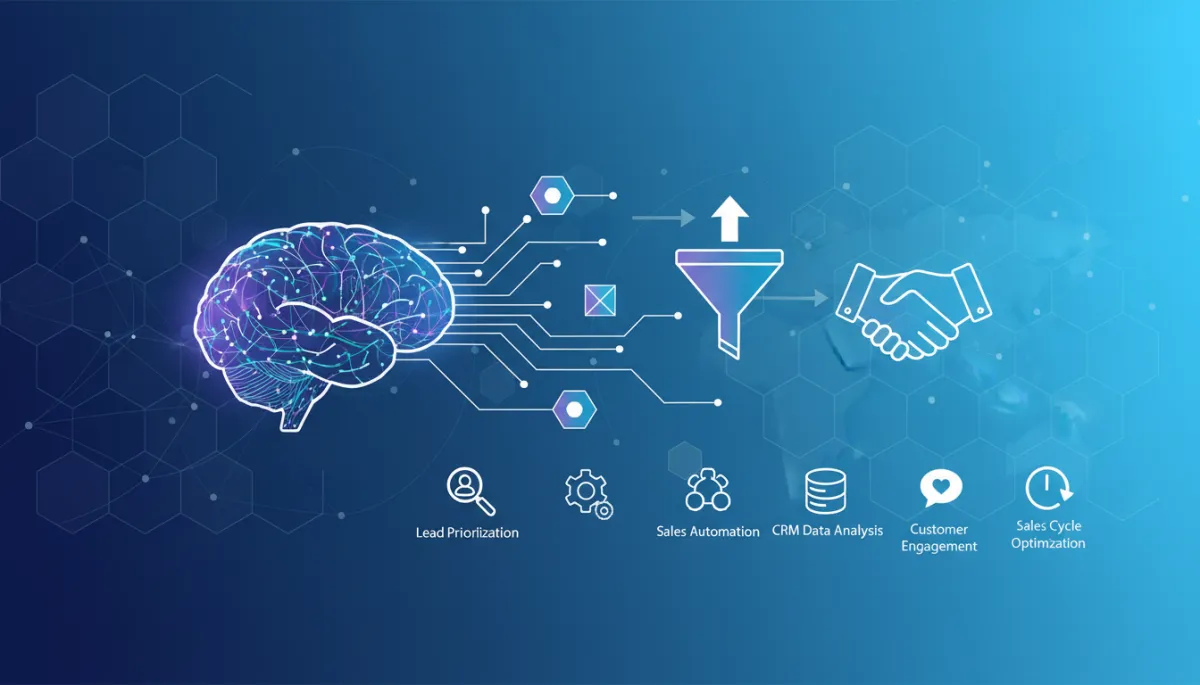
Traditional lead scoring often relies on manual rules: add 10 points if they open an email, subtract 5 if they don’t answer a call, and so on. AI Lead Scoring goes further by continuously learning from your real sales outcomes. It analyzes four key dimensions:
Customer fit: Industry, company size, location (e.g., Canadian vs. international), budget range, and job title to assess whether a lead matches your ideal customer profile.
Behaviour: Website visits, page depth, time on key pages, form submissions, and downloads that signal intent and interest.
Customer engagement: Email opens and clicks, SMS replies, call outcomes, and meeting attendance that show how actively a lead interacts with your brand.
Historical patterns: Past deals, win/loss reasons, and time-to-close for similar leads, allowing more accurate predictions of who is likely to convert.
By combining these signals, AI can rank leads more precisely than any static rule set. In platforms such as LeadMagno, this intelligence feeds directly into your pipelines, so high-potential leads automatically rise to the top for immediate follow-up.
Connecting Lead Scores to Clear, Actionable Steps
A lead score is only useful if your team knows exactly what to do with it. Effective Lead Prioritization means mapping score ranges to specific, automated and human actions. For example:
Hot leads (90–100): Immediate call from sales, same-day personalized email, and a LinkedIn touchpoint.
Warm leads (60–89): Automated nurture sequence plus a task for the rep to follow up within 48 hours.
Cold leads (<60): Long-term education campaigns and retargeting ads, with no immediate sales call.
With Sales Automation tools in LeadMagno or HighLevel, these actions can be triggered automatically whenever a lead crosses a score threshold. This tight connection between lead scores and specific actions is what turns insight into revenue.
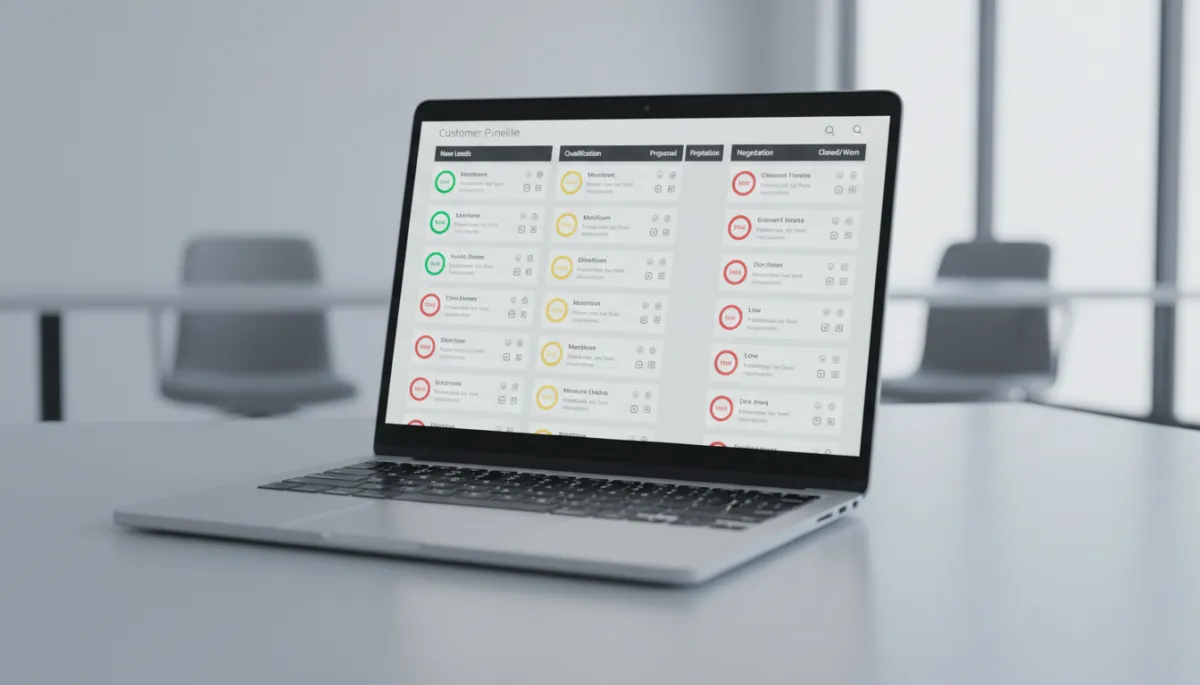
Tying lead scores to clear next steps keeps reps focused on revenue-driving work.
How to Measure Whether Your Lead Scoring Is Working
To make AI lead scoring a true business asset, you need to track whether it’s improving outcomes, not just rearranging your pipeline. A few core metrics to monitor inside your CRM and reporting tools include:
Conversion rate by score band: Compare close rates for hot, warm, and cold leads. Hot leads should convert at a meaningfully higher rate; if not, revisit your model.
Average time-to-first-touch: Measure how quickly your team contacts high-scoring leads after they enter the CRM or cross a threshold. Faster is almost always better.
Sales cycle length by score band: Track whether high-scoring leads close faster than low-scoring leads — a strong signal that your prioritization is aligned with real buying intent.
Revenue per lead (RPL): Calculate revenue generated per lead in each score range to see where your pipeline creates the most value.
Platforms like LeadMagno make it easier to slice your pipeline by score and outcome, so you can continuously validate and tune your scoring strategy rather than setting it once and hoping for the best.
Sales Cycle Optimization: Respond Faster, Close Sooner
AI-driven Lead Prioritization is a powerful lever for Sales Cycle Optimization and Sales Cycle Reduction. When your team can instantly see which leads are most likely to buy, they waste less time chasing unqualified prospects and more time having meaningful conversations with decision-makers.
AI also enables faster, more relevant Customer Engagement. For example, if a high-scoring prospect visits your pricing page twice in one day, your CRM can trigger an SMS or email offering a quick discovery call. Personalized outreach like this — based on real-time behaviour — shortens the sales cycle by catching prospects at the moment of highest intent.
📌 Key Takeaway: Speed and relevance win deals. AI lead scoring gives your team both by surfacing the right lead at the right moment with the right message.
AI as a Co‑Pilot: Supporting, Not Replacing, Human Judgment
Despite its sophistication, AI Lead Scoring should never replace your team’s experience and intuition. Instead, it should act as a co‑pilot inside a connected sales process. Reps still need to qualify budget, authority, and timing; they still need to read the room on calls and adapt to each buyer’s style.
When AI insights live directly inside your CRM — as they do in platforms like LeadMagno — your team can see scores, engagement history, and key signals alongside notes, tasks, and deals. This integration keeps AI firmly embedded in your existing workflows, rather than forcing reps to jump between disconnected tools or dashboards.
The Future: Dynamic, Always-On Lead Qualification
The next wave of AI Lead Scoring is dynamic lead qualification — scores that update in real time as behaviour, engagement, and context change. Instead of a one-time score assigned when a lead enters your funnel, AI will continuously adjust priorities based on new data: a webinar attended, a proposal viewed, a contract forwarded internally, or a new stakeholder added to the conversation.
As models learn from larger datasets and more Canadian businesses adopt tools like LeadMagno and HighLevel, expect lead scoring to become more predictive, more personalized, and more tightly woven into your marketing and sales automation. Resources such as the Salesforce CRM guide or HubSpot’s lead scoring best practices can help you understand where the market is heading and how to stay ahead.
Bringing It All Together With LeadMagno
For small and medium-sized businesses in Canada, the opportunity is clear: combine reliable CRM data, AI-driven Lead Prioritization, and smart Sales Automation to close more deals with less effort. LeadMagno brings these capabilities together in one marketing CRM — from capturing leads across channels to nurturing them with email and SMS to surfacing the hottest opportunities for your sales team.
If you are ready to reduce missed opportunities, cut manual busywork, and build a truly connected sales process, book a free demo of LeadMagno today and see how AI-driven lead scoring can help you close deals faster.
FAQ: AI Lead Scoring, CRM, and Sales Automation
Q: How long does it take for AI lead scoring to start working?
Most Canadian businesses see meaningful patterns within a few weeks, once the system has enough data on opens, clicks, calls, and outcomes. Accuracy improves as more leads move through your pipeline.
Q: Do I need a data scientist to manage AI lead scoring?
No. Platforms like LeadMagno are designed so marketing and sales teams can configure and refine scoring using intuitive settings, reports, and automation — without writing code or building models from scratch.
Q: Will AI lead scoring replace my sales reps?
AI supports your reps by telling them where to focus; it does not replace conversations, qualification, or relationship-building. The best results come when AI and human judgment work together.
Q: What if my business doesn’t have a lot of historical data yet?
You can start with a simple, rules-based model and gradually layer in AI as more data is collected. LeadMagno can help you standardize data capture from day one so your scoring improves over time.


Facebook
Instagram
X
LinkedIn
Youtube
TikTok