







AI in CRM: Transforming Data into Revenue Engines
CRM, Artificial Intelligence, B2B Revenue Operations
What Is AI in CRM? From Static Databases to Predictive Revenue Engines
By 2026, 64% of CRM platforms embed AI features, yet many B2B teams still operate them like glorified address books. The result is a widening performance gap: organizations that operationalize AI in CRM are seeing up to US$13.50 ROI per dollar spent, versus US$8.71 for traditional CRM alone [1]. For commercial leaders, the question is no longer if AI belongs in CRM, but how fast you can turn it into a predictable, measurable growth system.
What Is AI in CRM?
AI in CRM is the use of machine learning, natural language processing, and automation inside your customer relationship platform to predict outcomes, personalize interactions, and orchestrate workflows across marketing, sales, and service. It transforms CRM from a passive record system into an active decision and execution layer for revenue operations.
In one sentence: AI in CRM is the intelligence layer that turns raw customer data into prioritized actions, at scale, in real time.
Quick Summary: Strategic Snapshot for Decision-Makers
AI-enabled CRM is growing to tens of billions in value by 2026, with AI features now present in 64% of platforms and delivering significantly higher ROI [1][2].
The biggest opportunity is not buying an “AI CRM”, but embedding AI into daily processes—lead scoring, forecasting, next-best-action, and retention.
If you want faster revenue cycles → prioritize AI for pipeline prioritization and workflow automation before experimenting with advanced use cases like emotion recognition.
Governance, data quality, and integration with your broader digital consultancy and martech stack determine whether AI in CRM scales or stalls.
Why AI in CRM Matters Now
CRM adoption is near-universal—91% of companies with more than 10 employees use one [1]. Yet research shows a 70+ percentage-point gap between general AI usage and AI actually integrated into CRM workflows [3]. This is where competitive advantage is being created: teams that close this gap are converting data exhaust into pipeline velocity.

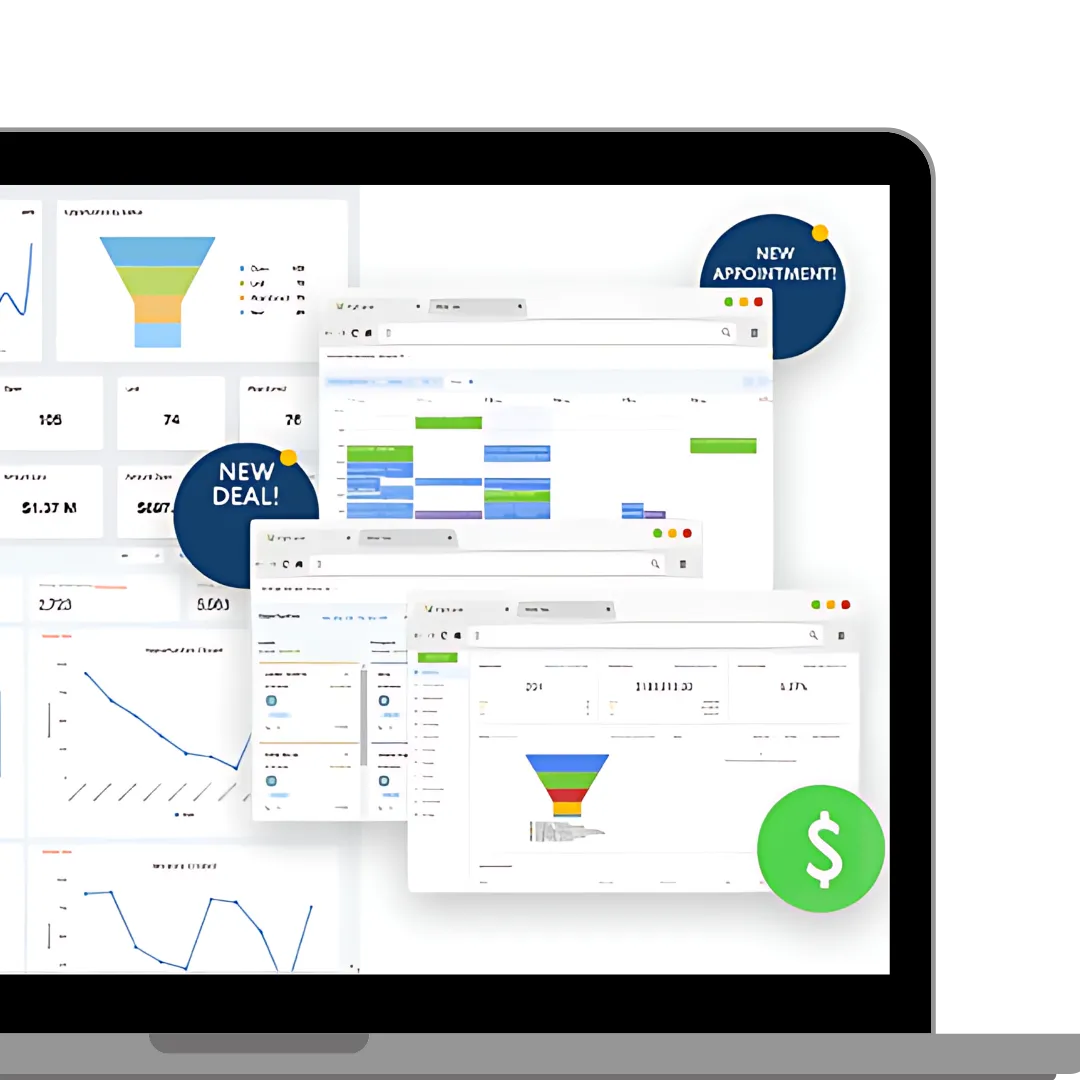
AI-enhanced CRM turns static records into prioritized, revenue-focused work queues.
Core AI-in-CRM Strategies (Symmetrical Framework)
1. Strategy: Define the Commercial Outcomes
If you want pipeline quality → focus AI on lead scoring, intent signals, and account propensity models.
If you want sales efficiency → prioritize AI for data entry, enrichment, and automated follow-up sequences.
If you want retention and expansion → deploy AI for churn prediction, customer health scoring, and next-best-offer.
2. Execution: Embed AI into Daily Workflows
Effective AI in CRM is invisible. Reps should feel “this task became easier,” not “I’m using AI.” Start with:
Predictive lead and account scoring feeding directly into call lists and outreach cadences.
AI-generated email drafts and call summaries that log automatically to the CRM record.
AI chatbots and virtual assistants syncing conversations, intent, and sentiment into contact timelines.
3. Systems & Operations: Build a Connected Growth Stack
AI in CRM performs best when it is part of a coherent revenue system: content, social, and sales motions aligned. For example, a documented content marketing strategy feeds intent-rich interactions into the CRM, while coordinated social media marketing campaigns generate behavioral data that AI can score and prioritize.
Platforms like LeadMagno’s MagnoPro are designed to act as an AI-native layer over CRM data—connecting lead intelligence, engagement scoring, and campaign orchestration into a single operational view.
4. Data & Measurement: From Dashboards to Decisions
Track uplift metrics: win-rate change, cycle time reduction, and incremental revenue attributed to AI-driven recommendations.
Monitor feature adoption: which AI suggestions are accepted or ignored by reps, and why.
Benchmark against industry data—AI CRM users seeing 34% productivity gains and 42% better lead scoring [1] is a realistic reference point.
5. Risks, Governance & Vendor Reality
Gartner notes that while 94% of CRM vendors market AI features, only around 18% are truly AI-native [2]. Leaders must distinguish between cosmetic AI add-ons and platforms where AI is embedded into the data model and workflow engine.
Establish data governance: consent, retention, and explainability standards for AI recommendations.
Define “human-in-the-loop” rules for high-risk decisions such as pricing, discounts, and churn interventions.
Decision Block: If your CRM data is incomplete or inconsistent, invest first in data hygiene and a structured digital consultancy engagement before layering advanced AI models.
Final Framework: How AI-in-CRM Systems Connect and Evolve
Think of AI in CRM as a staged maturity model:
Foundation: Clean data, standardized processes, clear ICP and lifecycle stages.
Assisted: AI supports humans with recommendations (scores, forecasts, content suggestions).
Orchestrated: AI coordinates multi-channel plays across email, social, and sales outreach using CRM intelligence.
Adaptive: Models learn from outcomes and continuously adjust scoring, routing, and messaging.
Executives should prioritize moving one stage at a time, with quarterly milestones and clear commercial KPIs. Partnering with AI-native tools such as LeadMagno for an implementation demo accelerates this evolution by aligning strategy, data, and execution in a single roadmap.
FAQs: AI in CRM for B2B Leaders
1. Is AI in CRM only for large enterprises?
No. The economics now favor mid-market and even smaller B2B teams. Many platforms offer AI features bundled into existing licenses, and the fastest ROI often comes from simple use cases—automated enrichment, scoring, and follow-up sequences—rather than complex custom models.
2. What data do we need before implementing AI in CRM?
At minimum: consistent account and contact records, opportunity stages, activity logs, and clear definitions of qualified leads and closed-won deals. AI amplifies whatever is in the system—good or bad—so data standards and governance should precede advanced automation.
3. How fast can we see ROI from AI-enabled CRM?
Benchmarks show many teams realizing measurable gains within 90 days when they focus on one or two high-impact workflows (e.g., lead routing and follow-up automation) and track uplift against a clear baseline [1].
4. Does AI in CRM replace sales and marketing teams?
AI replaces low-value tasks, not strategic judgment. It is most effective when used to prioritize work, surface insights, and handle repetitive interactions—freeing specialists to focus on complex deals, messaging, and relationship building.
5. How do we evaluate AI-native versus AI-add-on CRM vendors?
Ask where models live (inside the core platform or in external tools), how recommendations are logged and measured, and whether AI outputs are explainable at the record level. Prioritize vendors whose AI is embedded into routing, scoring, and reporting—not just provided as a separate “insights” tab.
References
[1] searchlab.nl – CRM and AI-in-CRM statistics 2026, adoption and ROI benchmarks.
[2] Gartner & related market reports – AI-native CRM vendor landscape and platform evolution.
[3] Workbooks & TechRadar – AI usage vs AI-in-CRM integration gap and mid-market trends.


Facebook
Instagram
X
LinkedIn
Youtube
TikTok