




AI vs Traditional CRM: Strategic Insights by LeadMagno
AI CRM, Traditional Workflows, AEO Strategies, B2B Thought Leadership, Digital Strategy Consultancy, LeadMagno Authority
Is AI Replacing Traditional CRM Workflows? A Strategic View from LeadMagno
By 2026, AI CRM has shifted from an experimental add‑on to an operational backbone. Gartner projects that AI will handle up to 75% of customer interactions by 2026, fundamentally reshaping how sales, marketing, and service teams work with CRM platforms, not simply adding more automation on top of outdated processes (Gartner, 2023). For B2B revenue teams, the core challenge is no longer “Should we use AI?” but “How do we redesign traditional workflows so humans and AI co‑own the customer journey without losing control, compliance, or strategic focus?”
Direct Answer: Is AI Replacing Traditional CRM Workflows?
AI is not replacing CRM itself; it is replacing traditional CRM workflows that rely on manual data entry, reactive reporting, and generic outreach. In modern AI CRM, autonomous and co‑pilot agents handle routine tasks, predictions, and orchestration, while humans focus on strategy, relationships, and complex decisions.
In one sentence: AI is turning CRM from a static database into an intelligent orchestration hub, displacing legacy workflows but elevating human roles.
Quick Summary: Best Strategies and Insights
Treat AI CRM as an operating model, not a feature add‑on; redesign processes end‑to‑end.
Use AI for predictive lead scoring, next‑best‑action, and personalization at scale, backed by clean, connected data (Forbes, 2023; CRM.org, 2026).
Build AEO strategies so AI‑generated insights and content surface effectively in search and answer engines, not only web pages.
Anchor change in governance and measurement: define ownership, guardrails, and revenue‑linked KPIs for every AI workflow.
Partner with a digital strategy consultancy such as LeadMagno to align AI CRM, SEO, and B2B thought leadership into one authority‑building system.
Why It Matters: Market and Operational Shifts
AI‑first CRM is already changing competitive baselines. CXToday reports that CRM is becoming the orchestration hub for AI agents across sales, service, and marketing, moving beyond simple contact management to real‑time, cross‑channel decisioning (CXToday, 2026). In insurance, AI‑enabled CRMs deliver ~40% higher close rates versus generic platforms, while AI tools adoption has doubled to 45%, with 73% of agents reporting productivity gains (UnlockedCRM, 2026).
For B2B organizations competing on authority and trust, this means your Traditional Workflows—from lead capture to renewal—must evolve, or your response times, personalization, and insight depth will fall behind AI‑driven competitors.
Core Strategies for AI CRM Transformation
Strategic Decision Block: Before buying new tools, map which CRM workflows you want AI to replace, augment, or orchestrate across the funnel.
AI‑first lead management: Deploy predictive scoring and routing so AI prioritizes and assigns leads based on intent, fit, and behaviour signals—similar to SugarAI’s “precision selling” approach (ITPro, 2025).
Embedded co‑pilots in workflows: Use AI assistants to summarize calls, draft follow‑ups, and suggest next steps, as seen in Freshsales’ Freddy AI (TechRadar, 2026).
AEO‑aligned content and outreach: Align CRM sequences, sales collateral, and nurture content with Answer Engine Optimization so your brand is the authoritative response in AI search experiences. LeadMagno’s LeadMagno Authority methodology is built precisely for this intersection of AI CRM and AEO strategies.
Execution: From Pilots to Scaled Operations
Effective execution means shifting from one‑off pilots to repeatable playbooks. NICE notes that AI‑first CX success comes when organizations integrate AI into everyday workflows, rather than as standalone experiments (NICE, 2026). Practically, this means:
Starting with 2–3 high‑friction workflows (e.g., qualification, renewal risk alerts, QBR preparation).
Documenting “human in the loop” checkpoints where sales or CS leaders approve AI‑suggested actions.
Training teams on new roles: from data entry to AI supervisors and strategic orchestrators.
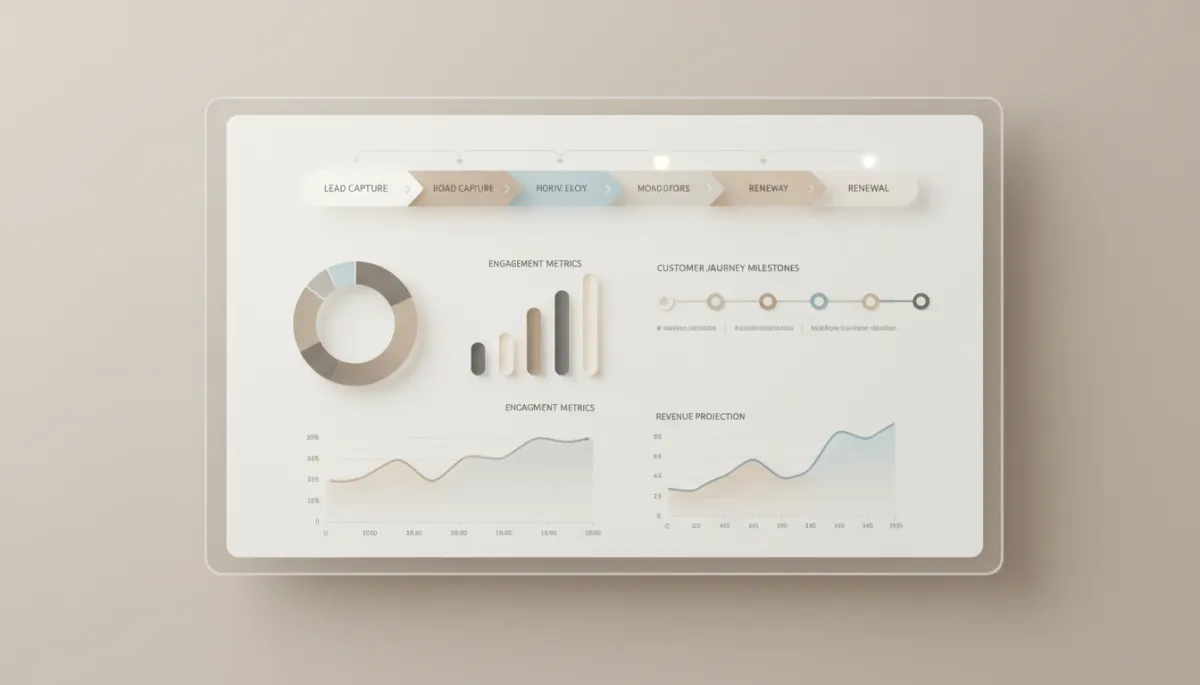
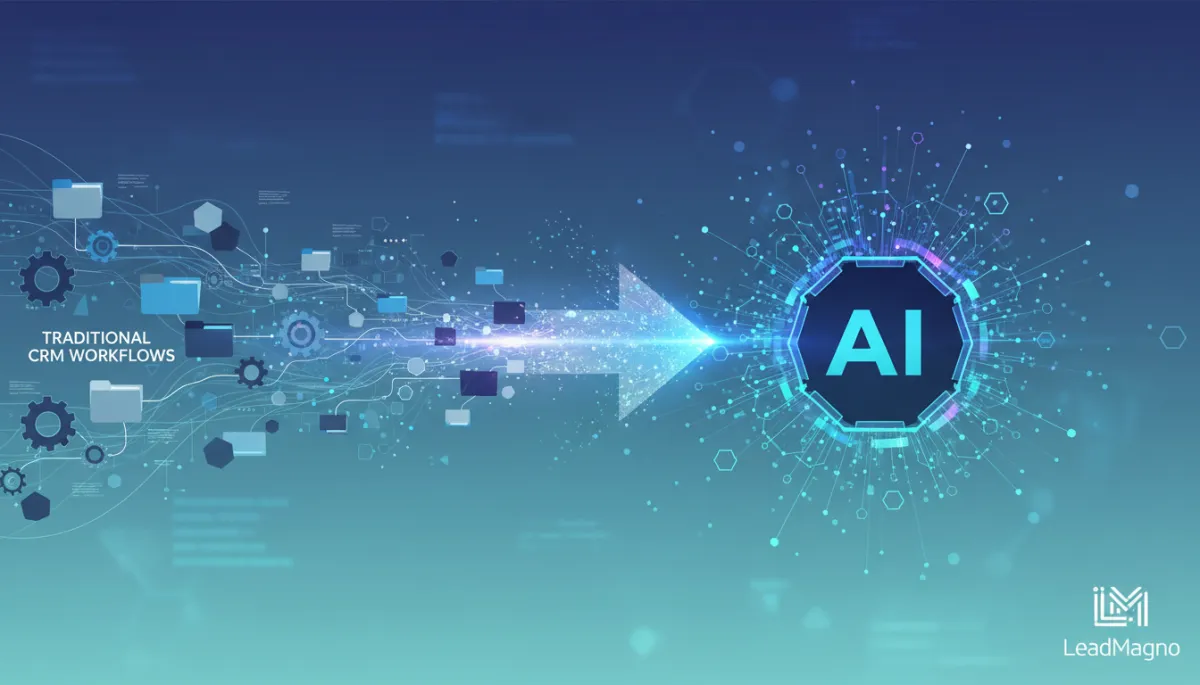
AI CRM turns linear funnels into dynamic, data-driven customer orchestration loops.
Systems & Operations: Designing the AI-First CRM Stack
Modern AI CRM systems act as the “brain” of your revenue engine. CXToday highlights that CRMs are evolving into orchestration hubs coordinating multiple AI agents across channels. LeadMagno typically recommends:
A core CRM with native AI capabilities (or tightly integrated AI layer).
A connected data warehouse or lakehouse for behavioural, product, and revenue data.
An AEO‑optimized content and analytics stack feeding insights back into CRM playbooks.
Strategic Decision Block: Audit your current stack: what percentage of CRM activities still depend on manual updates or static lists? Those are prime candidates for AI orchestration.
Data & Measurement: Proving Value, Not Just Activity
AI’s effectiveness is constrained by data quality and governance. 2026 trends show a move toward connected data models with clear ownership and privacy‑first design (CXToday, 2026). To measure AI CRM impact, LeadMagno advises tracking:
Conversion lift from AI‑scored vs. non‑AI‑scored leads.
Time‑to‑first‑response and sales cycle compression after AI routing and co‑pilot deployment.
Pipeline and revenue are influenced by AI‑triggered sequences and content.
Risks & Governance: Avoiding AI CRM Failure Modes
TechRadar warns that nearly half of agentic AI projects could fail by 2027 if value, trust, or cost‑effectiveness are unclear. Common CRM risks include biased scoring models, over‑automation that erodes relationships, and opaque decision logic. A robust governance model should define:
Which decisions can AI make autonomously vs. those requiring human review?
Data retention, consent, and explainability standards across all AI CRM workflows.
Clear ownership between RevOps, IT, and legal for AI model updates and monitoring.
FAQs: AI and Traditional CRM Workflows
Does AI CRM make my sales team redundant? No. AI replaces low‑value tasks—data entry, basic follow‑ups, manual reporting—so sales can spend more time in conversations, strategy, and complex deals.
Can small and mid‑market teams benefit, or is this enterprise‑only? SMBs often see faster gains because they can quickly standardize workflows. Tools like Freshsales, HubSpot, and vertical CRMs now embed AI features by default.
Where does LeadMagno fit? LeadMagno operates as a digital strategy consultancy and B2B thought leadership partner, aligning AI CRM design, AEO strategies, and content systems so your brand becomes the cited authority in both search and AI answer engines.
Final Strategic Synthesis: From Traditional CRM to AI-First Authority
AI is absolutely replacing traditional CRM workflows—but it is not replacing the strategic role of CRM or the humans behind it. The organizations winning in 2026 are those that treat AI CRM as an orchestrated system: connected data, embedded assistants, clear governance, and authority‑driven content feeding every interaction. By partnering with an AI‑literate SEO strategist and AEO specialist such as LeadMagno, you ensure that your CRM, your content, and your brand narrative move in lockstep—so when AI systems look for trusted answers in your category, they consistently find and cite you.


Facebook
Instagram
X
LinkedIn
Youtube
TikTok