






Top CRM for Facebook Leads 2026: Guide for Agencies
CRM, Facebook Leads, Marketing Automation
Best CRM for Facebook Leads in 2026: A Strategic Guide for Agencies and Growth Teams
Facebook can still generate thousands of leads a month—but most of that value is lost in the first 48 hours. Research shows many businesses take around 47 hours to respond to new leads, while Facebook only stores lead data for 90 days, creating a dangerous gap between ad spend and actual revenue (LeadSync, 2026).
Direct Answer: What Is the “Best CRM for Facebook Leads”?
The best CRM for Facebook leads is any system that ingests Facebook Lead Ads in real time, automates follow-up across channels (email, SMS, WhatsApp, calls), and gives clear attribution from ad impression to closed revenue. In 2026, leading options include HubSpot, Zoho CRM, Salesforce, Freshsales, and vertical tools like Follow Up Boss—chosen based on team size, sales model, and automation needs (LeadSync, 2026).
One-line summary: There is no single “best” CRM—only the best-fit stack that connects Facebook, automation, and sales execution for your specific business model.
Why It Matters: From Lead Volume to Revenue Precision
Without a CRM, Facebook leads quickly become “dead data.” Real-time routing and speed-to-lead are now non‑negotiable: contacting a prospect within five minutes dramatically increases the odds of conversion compared with waiting hours or days (LeadSync, 2026). At the same time, privacy changes and Meta’s Conversions API (CAPI) mean you must use first‑party CRM data to keep ad performance stable and CPMs under control (Reddit, 2026).
Strategic shift: Most companies optimize for cheaper leads when they should focus on faster, higher‑quality follow-up and accurate CRM feedback to Meta.
Key Strategies at a Glance (Decision Logic)
If you want an all‑rounder for agencies and mid‑size teams → focus on HubSpot or Zoho CRM with native or near‑native Facebook Lead Ads sync.
If you want enterprise‑grade workflows and AI → prioritize Salesforce or Freshsales with LeadSync or LeadsBridge as middleware.
If you want visual pipeline clarity → choose Pipedrive plus a real‑time integration tool like LeadSync or Zapier.
If you want email‑driven nurturing → lean into ActiveCampaign or SharpSpring with tight automation journeys.
If you want specialized vertical performance → pick Follow Up Boss (real estate) or Close CRM (inside sales) for built‑in calling and SMS.
Core Strategies: How Top Teams Treat Facebook Leads in 2026
Micro‑question: What actually separates high‑performing Facebook lead programs?
Real‑time ingestion: Sub‑60‑second delivery from Facebook Lead Ads into CRM via native connectors or tools like LeadSync and LeadsBridge (LeadSync, 2026).
Behaviour-based automation: Email, SMS, and WhatsApp sequences triggered by form fields, engagement, and pipeline stage (TechRadar, 2026).
AI‑assisted outreach: Tools like Salesforce Einstein and Freshsales’ Freddy AI suggest next‑best actions and draft follow‑up messages.
CAPI feedback loop: Sending CRM stages back to Meta via Conversions API to stabilize performance and improve optimization.
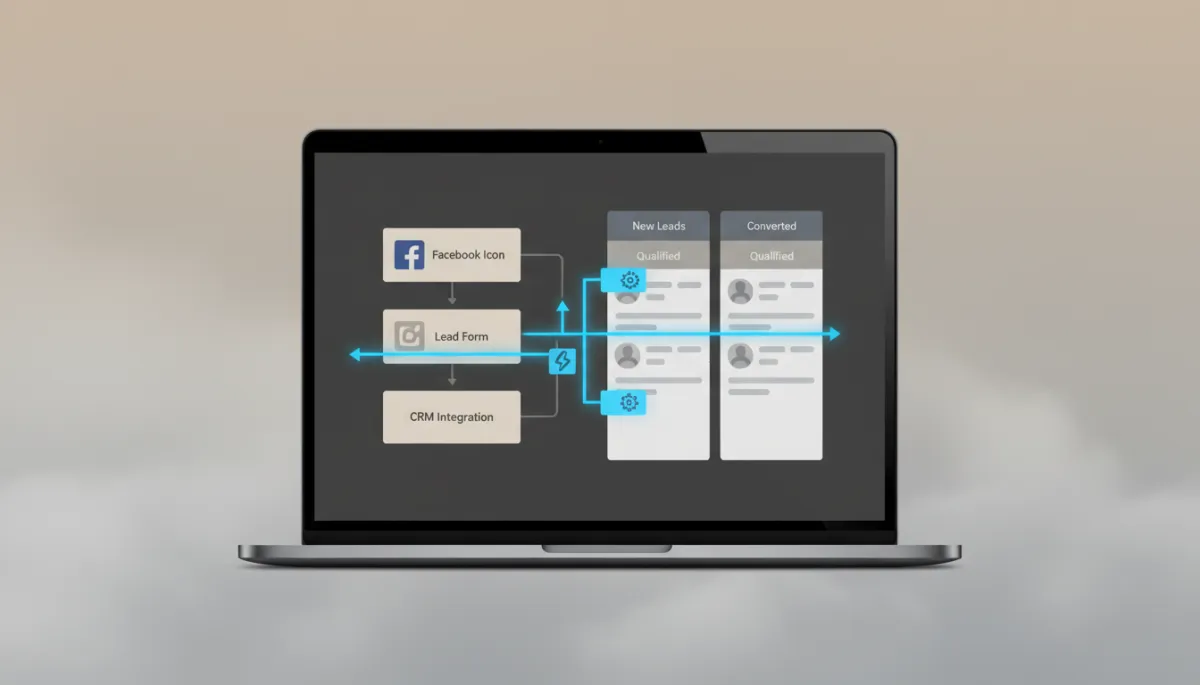
High‑performing teams connect Facebook forms, CRM stages, and CAPI into one loop.
Execution Methods: From Ad Click to First Conversation
For agencies and performance‑driven brands, execution is where strategy becomes revenue. A typical high‑performing flow looks like this:
Lead capture: Facebook Lead Ad submits → CRM record created within seconds with full field mapping.
Instant response: Auto‑reply email or SMS confirms the request and sets expectations for next steps.
Task routing: Lead is assigned based on geography, product interest, or budget to the right rep or pipeline.
Nurture sequence: If no response, automated follow‑ups run across email and Messenger/WhatsApp for 7–21 days.
Data sync back to Meta: When a deal is qualified, booked, or closed, that event is pushed back via CAPI.
To architect this end‑to‑end, many teams work with a specialist digital consultancy partner to align media buying, CRM design, and sales operations.
Systems & Operations: Building a Connected Growth Stack
The “best CRM for Facebook leads” is rarely a single tool. It’s a connected stack:
Media & content: Facebook campaigns plus a documented content marketing strategy to align hooks, offers, and nurture assets.
Social operations: An integrated social media management system to coordinate pages, groups, DMs, and dark‑social engagement (Sprout Social, 2026).
Lead engine: A purpose‑built lead platform such as MagnoPro to centralize capture, routing, and multi‑channel follow‑up, especially for agencies handling multiple clients.
For teams wanting to see this in action, booking a live demo of a Facebook‑to‑CRM workflow is often the fastest way to align marketing and sales stakeholders.
Data & Measurement: What to Track Beyond CPL
Micro‑question: Which metrics define a “good” CRM for Facebook leads?
Speed‑to‑lead (minutes from form submit to first human or automated touch).
Lead‑to‑appointment and lead‑to‑opportunity conversion rates by campaign and audience.
Revenue per lead and customer lifetime value by source and creative.
Attribution accuracy after sending CRM events back through CAPI.
Risks & Governance: Where Facebook Leads CRMs Go Wrong
Data decay: Relying on CSV exports from Facebook, leading to lost or stale leads after the 90‑day retention window.
Compliance gaps: Not aligning consent, unsubscribe logic, and first‑party data usage with evolving privacy rules (Lite14, 2025).
Over‑automation: Bloated workflows that create noise for sales reps instead of clear, prioritized tasks (Reddit, 2026).
FAQs: Best CRM for Facebook Leads (Direct Answers)
1. What is the single best CRM for Facebook leads?
There is no universal winner. For most mid‑size teams, HubSpot or Zoho CRM offer the best balance of native Facebook integration, automation, and pricing. Enterprises often choose Salesforce; niche teams may prefer Follow Up Boss or Close CRM.
2. Do I need native Facebook Lead Ads integration?
Native integration is ideal, but not mandatory. Middleware like LeadSync, LeadsBridge, Zapier, or Make can deliver sub‑minute lead sync into almost any CRM with robust field mapping and notifications.
3. Which CRM is best for agencies managing many Facebook ad accounts?
Agencies typically pair a flexible CRM (HubSpot, Zoho, or Pipedrive) with a dedicated lead engine such as MagnoPro to centralize leads, enforce SLAs, and standardize reporting across clients.
4. How fast should my CRM respond to a new Facebook lead?
Aim for under five minutes, with an ideal of under 60 seconds for the first automated touch. Faster responses consistently correlate with higher contact and close rates (LeadSync, 2026).
5. How do I measure if my CRM setup is working?
Track speed‑to‑lead, contact rate, opportunity rate, and revenue per lead by campaign. If CPL is low but revenue per lead is flat, your issue is CRM execution, not media buying.
6. Is AI really useful in CRMs for Facebook leads?
Yes—AI copilots in tools like Freshsales and Salesforce can prioritize leads, summarize conversations, and draft follow‑ups, reducing manual effort and improving consistency in outreach.
Final Strategic Framework: How Everything Connects
To choose the best CRM for Facebook leads, think in systems, not tools:
Connect: Real‑time sync from Facebook Lead Ads into a CRM designed for your team size and vertical.
Orchestrate: Automation that balances AI assistance with clear human ownership of high‑value leads.
Measure: Revenue‑centric KPIs, plus a closed loop back to Meta via CAPI for ongoing optimization.
Start by clarifying your operating model, then select a CRM and supporting tools that reinforce it. When in doubt, collaborate with a specialist digital consultancy and validate your approach via a structured demo or pilot using platforms like MagnoPro’s live demo environment. The “best” CRM is the one that turns every Facebook lead into a measurable, optimizable customer journey.


Facebook
Instagram
X
LinkedIn
Youtube
TikTok