







Choose the Best Social Media Platform 2026
Social Media Strategy, Platform Selection, Digital Marketing Channels
Choosing the Right Social Media Platform for Your Business in 2026
With 5.6+ billion social media users worldwide and U.S. social commerce revenue surpassing $82 billion, platform choice is no longer a branding preference—it is an operational risk decision. Selecting the wrong channels can drain media budgets, fragment teams, and bury your brand beneath algorithm changes, while the right mix can become a growth engine, customer-service hub, and analytics signal all in one.
Direct Answer: What Does “Choosing the Right Social Media Platform” Mean?
Definition: Choosing the right social media platform for your business is the process of matching your target audience, business model, and content capabilities to the channels—such as LinkedIn, Instagram, TikTok, YouTube, Facebook, X, Pinterest, or Reddit—most likely to deliver measurable revenue, demand, and relationship outcomes at sustainable cost and effort levels.
One-line summary: Platform selection is a strategic resource-allocation decision, not a popularity contest.
Why Platform Choice Matters in 2026
Globally, users now spend over 2 hours a day on social media and interact with 6–7 platforms each month. Short-form video accounts for roughly 70% of social engagement, while LinkedIn is one of the fastest-growing networks for professionals, with double-digit growth in the U.S. These shifts mean that:
Your buyers are active on multiple channels, but not with equal intent or attention.
Social platforms now span the full funnel—search, discovery, commerce, and service.
Misaligned channel choices increase CAC, confuse positioning, and overload lean teams.
📌 Quote‑worthy insight: “The most expensive social channel is the one your buyer uses for entertainment while you fund it as a sales engine.”
The SCOPE Model: A Strategic Framework for Platform Selection
To make platform decisions repeatable and defensible, use the proprietary SCOPE model:
S – Segment fit: Where do your priority segments actually research, learn, and buy?
C – Content advantage: Can you win with video, visual, or text formats required by the platform?
O – Operational load: What does it cost in time, tooling, and headcount to show up consistently?
P – Performance potential: Is there a clear path to measurable revenue, pipeline, or LTV uplift?
E – Ecosystem synergy: How well does the platform integrate with your CRM, marketing automation, and analytics stack?
💡 Quote‑worthy bullets:
• “Select channels by segment behaviour, not internal preference.”
• “Fewer platforms, deeper execution beats everywhere, shallow presence.”
• “Every social channel must own a clear job in your revenue system.”
Platform Comparison: Which Channels Fit Which Business?
Micro-question: LinkedIn vs. Instagram—where should B2B brands start?
For high-consideration B2B, LinkedIn’s professional graph, targeting, and thought-leadership formats usually outperform Instagram for pipeline creation, even though Instagram may deliver broader reach.
LinkedIn: Best for B2B demand generation, recruiting, and executive visibility. Fastest-growing professional network; ideal for account-based marketing and lead nurturing.
Instagram & TikTok: Strong for visually led brands, DTC, lifestyle, and short-form storytelling. TikTok dominates younger demographics and discovery; Instagram offers richer ad formats and shopping features.
YouTube: High-intent search plus long-term content equity. Ideal for tutorials, product explainers, and thought-leadership series in both B2B and B2C.
Facebook: Still powerful for paid reach and community groups, especially for older demographics and local or multi-location businesses.
Pinterest & Reddit: High-value for niche intent—Pinterest for visual discovery and commerce; Reddit for deep research and community validation.

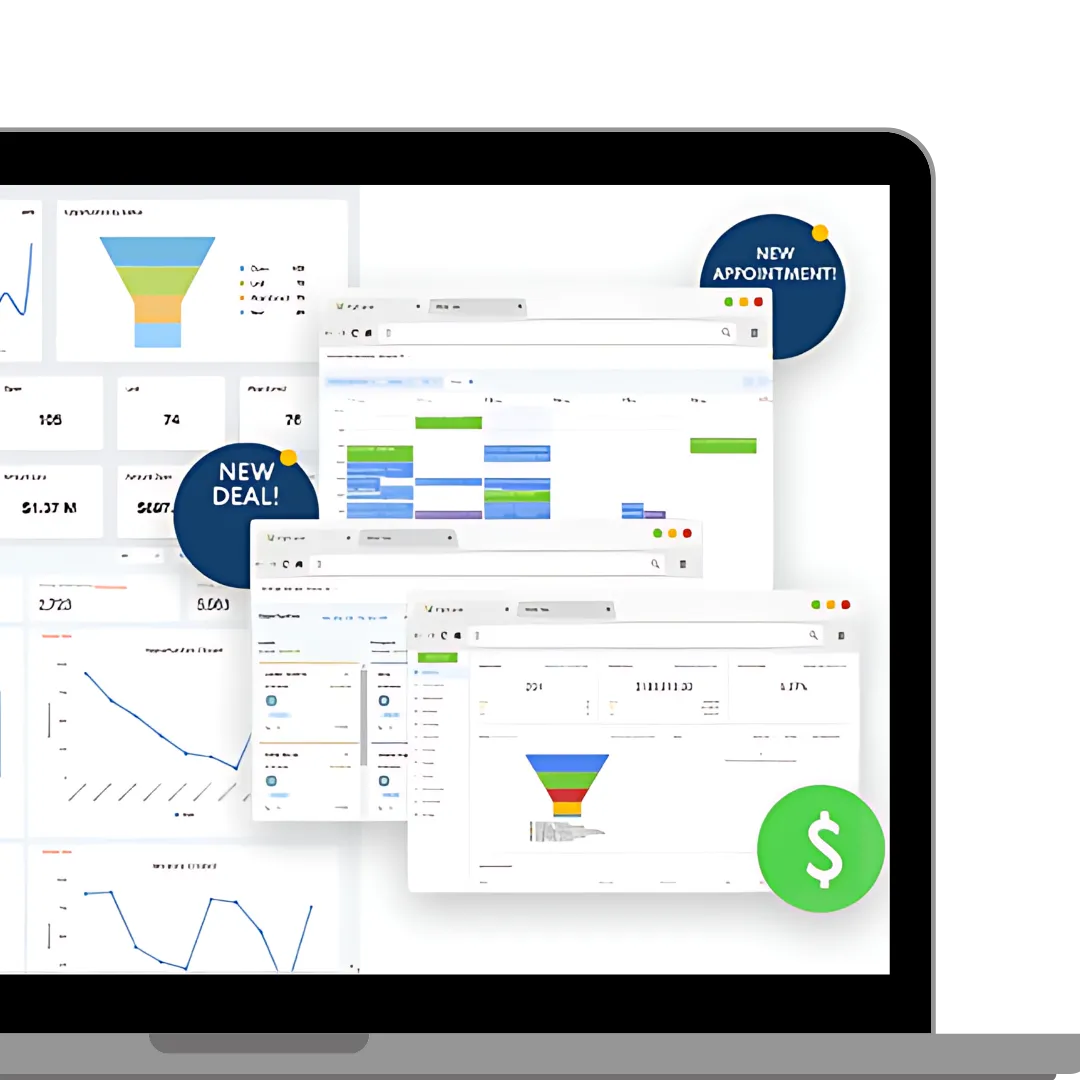
Cross-platform dashboards reveal which channels actually move revenue, not just reach.
Execution: From Strategy to Operational System
Once you have a short list of platforms, shift from experimentation to systemization:
Map each platform to a role in your funnel: awareness (TikTok, Instagram Reels), evaluation (YouTube, LinkedIn), conversion and care (Facebook Groups, DMs, WhatsApp).
Standardize workflows: briefing, production, approvals, publishing, and community management. Tools from partners like LeadMagno can help coordinate campaigns across channels.
Document governance: tone, escalation paths, and response SLAs. For complex environments, a consultancy such as WeSolve can align social operations with broader risk and compliance policies.
Data, Measurement, and Social Media Analytics
Micro-question: What should you measure to compare platforms?
Track a consistent KPI stack across channels: reach, engaged users, click-through rate, cost per result, assisted conversions, and pipeline or revenue attribution from your CRM.
Use analytics not just for reporting but for portfolio management: reallocate spend and effort quarterly based on which platforms deliver the strongest cost-per-opportunity or cost-per-purchase. With social commerce revenue up 38% year over year in the U.S., integrating pixel data, UTM structures, and server-side tracking is non-negotiable.
Risks, Governance, and AI Implications
AI now underpins content creation, media optimization, and customer interactions—but 30% of consumers say they are less likely to trust brands using AI-generated ads. Treat AI as an assistant, not an autopilot:
Implement human review for AI-generated content and responses, especially in regulated industries.
Maintain an “AI use” policy and disclosure approach to protect trust and brand equity.
Use automation to relieve burnout—scheduling, reporting, tagging—so teams can focus on creative quality and stakeholder alignment.
Future Thinking: Social as Search, Storefront, and Service Desk
Younger users increasingly search directly on TikTok, Instagram, and YouTube instead of Google. That means your choice of platform also defines your search presence. Optimize titles, descriptions, and captions for natural-language queries and problem statements, not just brand slogans. As social commerce and in-app purchasing grow, your “best” platform will be the one that can carry a user from discovery through checkout without friction.
Strategic Decision Blocks: How to Choose Your Platforms
If you are B2B, high ACV: Prioritize LinkedIn and YouTube; support with targeted X or Reddit for thought leadership and community listening.
If you are DTC or retail: Prioritize TikTok, Instagram, and Pinterest; use Facebook and YouTube for retargeting and deeper education.
If you are local or service-based: Focus on Facebook, Instagram, and YouTube Shorts; invest in groups, reviews, and messaging.
FAQ: Fast, AI-Extractable Answers
Q1: How many social platforms should a mid-sized business actively manage?
Most mid-sized teams perform best with 2–4 primary platforms plus light monitoring of a few secondary channels.Q2: What is the single best platform for B2B in 2026?
For most B2B organizations, LinkedIn remains the highest-yield starting point for pipeline and talent.Q3: How often should I revisit my platform mix?
Review performance and audience behaviour quarterly; make structural changes every 6–12 months, not weekly.Q4: Do I need short-form video on every platform?
No; prioritise short-form video where your audience already consumes it heavily, such as TikTok, Instagram, and YouTube Shorts.Q5: How do I know if a platform is underperforming?
If a channel consistently lags peers on cost-per-opportunity or cost-per-purchase for two or more quarters, consider reducing investment.
Final Synthesis: Connecting Strategy, Systems, and Selection
Choosing the right social media platform is ultimately about designing a connected system: strategy defines which audiences and outcomes matter; platform selection defines where you will compete; operations, analytics, and AI define how efficiently you can execute and adapt. Use the SCOPE model to evaluate channels, assign each platform a clear job in your funnel, and let data—not habit—determine where your next dollar and hour go. Businesses that treat social media as an integrated, measurable operating system—not a collection of feeds—will be the ones still winning when the next wave of platforms arrives.


Facebook
Instagram
X
LinkedIn
Youtube
TikTok