






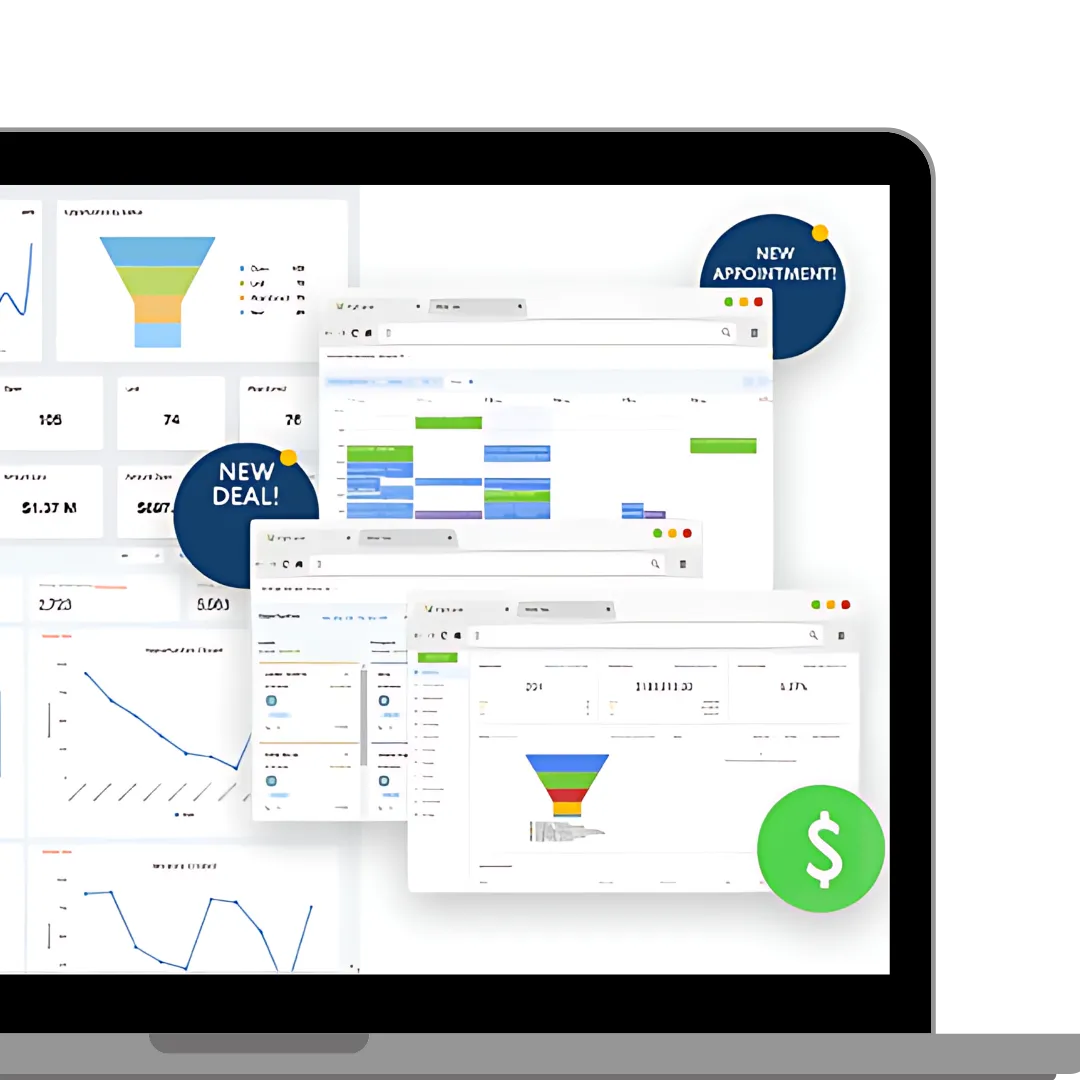
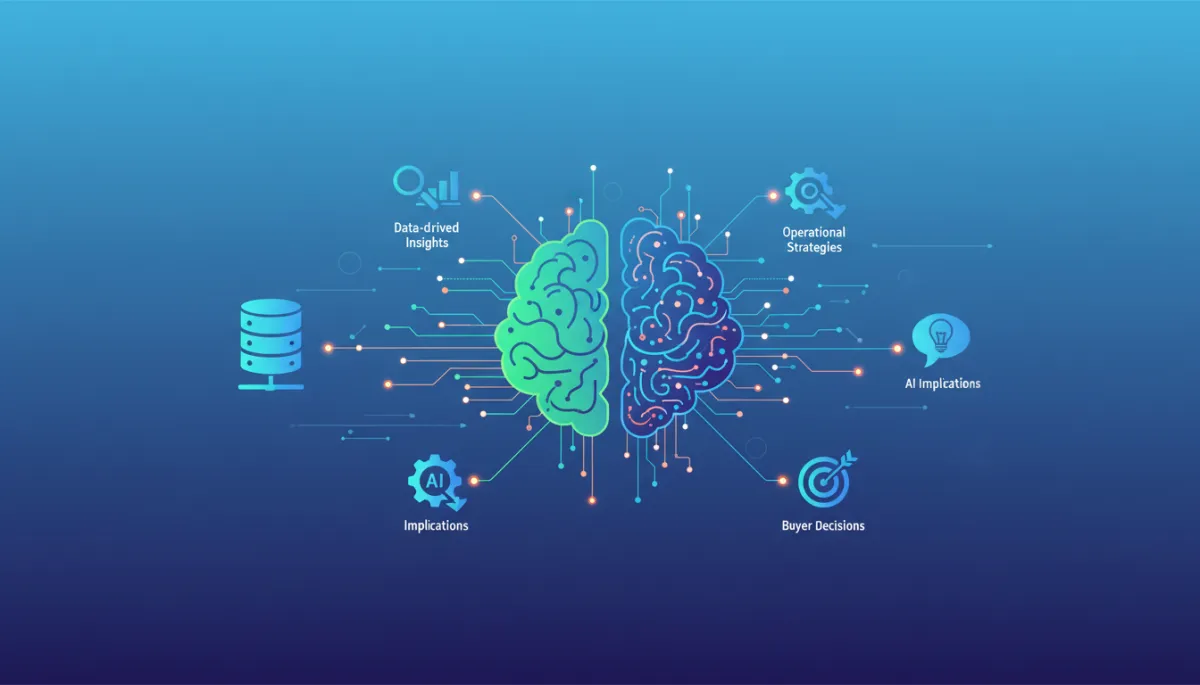
CRM: From Database to Decision Engine
CRM Evolution, Decision Engine, Data-driven CRM, AI in CRM
CRM Is No Longer a Database — It Is a Decision Engine
From LeadMagno’s vantage point, CRM has crossed a structural threshold: it is no longer a static record system but the primary decision engine for revenue, retention, and customer experience. With CRM now a USD 101 billion market and 64% of platforms AI‑enabled, the systems that win are those that turn data into decisions in real time, not dashboards later (Searchlab).
Why This Shift Matters (Direct Answer)
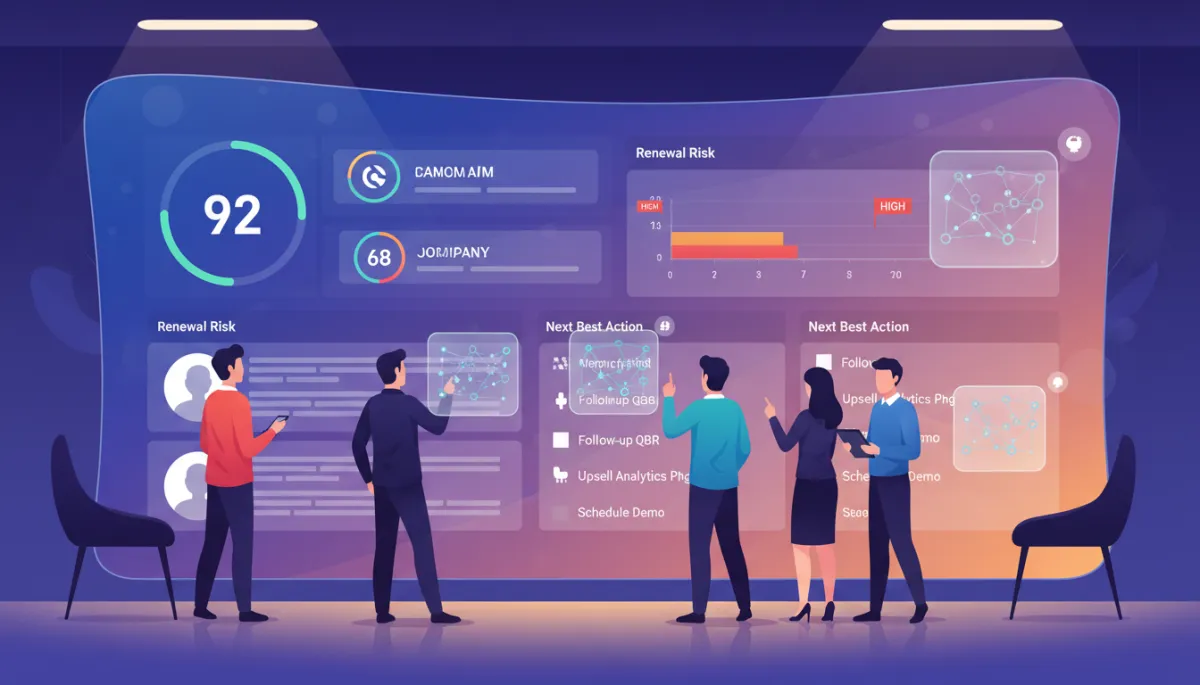
Q: Why does “CRM as decision engine” matter? A: Because every campaign, sequence, and sales motion now competes on decision speed, precision, and consistency, not on who stores the most contacts. CRM Evolution is about orchestrating next-best-actions, not logging activities.
💡 Real-world example: A B2B SaaS company using an AI-enabled CRM and HighLevel for marketing automation re-routed inbound leads in real time based on deal size, intent signals, and territory. By treating CRM as a decision engine, they cut lead response time from 2 hours to 8 minutes and increased qualified pipeline by 32% in one quarter.
Core Strategies & Execution: From Records to Revenue Logic
Define decision points: lead routing, offer selection, pricing, success playbooks, and renewal risk.
Encode rules + models: combine business rules, AI scoring, and propensity models directly in CRM workflows.
Close the loop: feed outcomes back into the decision engine for continuous optimization.
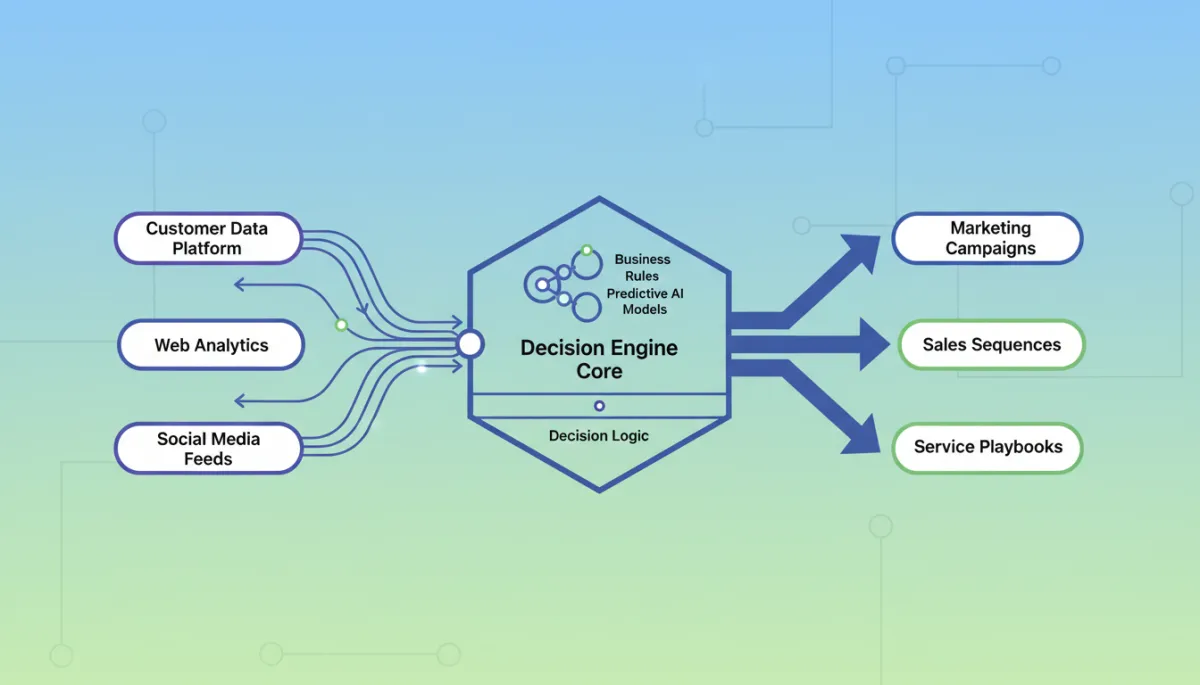
Practical Workflow: From Traditional CRM to Decision-Engine CRM
A practical way to see the transition is to compare how a traditional CRM and a decision-engine CRM handle the same scenario: a new enterprise lead requesting a demo.
Traditional CRM workflow:
Form submission creates a contact and opportunity record.
Marketing manually assigns leads to reps based on territory spreadsheets.
Rep sends a generic follow-up email and books a demo when they get to it.
Decision-engine CRM workflow (using tools like HighLevel AI and a unified data fabric):
Lead hits a geo-aware landing page, enriched in real time with firmographic and intent data.
The CRM evaluates decision rules: ACV potential, vertical, buying stage, and territory coverage.
An AI model scores the lead and triggers a next-best action: route to the top-performing enterprise rep, send a tailored content sequence, and surface a call script in the dialer.
If the rep doesn’t act within 15 minutes, the engine escalates to a backup rep and fires a personalized SMS via the HighLevel trial workspace.
📌 Key takeaway: The transition is not “new software”; it is new decision paths encoded into your CRM, often supported by a digital consultancy partner that can redesign workflows end-to-end.
Systems, Data & AI: The LeadMagno Decision Engine Model
LeadMagno’s CRM Decision Engine Model aligns four layers:
Data fabric: unified, privacy‑first customer profiles, consent, and behavioural signals across sales, marketing, and service (CXToday).
Decision logic: rules, segmentation, and AI models (lead scoring, churn risk, LTV).
Execution layer: sequences, playbooks, and omnichannel orchestration in your CRM and MAP.
Insight & governance: outcome dashboards, experimentation, and “prove‑it” governance.
AI summary for executives: Treat CRM as a connected decision engine that unifies data, embeds AI, and drives consistent next-best-actions across the funnel. The ROI uplift from AI‑enabled CRM can exceed 55% versus traditional deployments (Searchlab).
AI Trust, Explainability & Governance
Sales, marketing, finance, and compliance must trust an effective decision engine. That means every AI-assisted decision should be explainable in plain language: why this leads, why this offer, why now.
Transparent scoring: show the top 3–5 factors driving a lead or churn score inside the CRM record.
Human-in-the-loop controls: allow reps to override recommendations and capture the reason, feeding back into model improvement.
Policy-aware rules: encode compliance and brand rules so AI can’t suggest actions that violate contracts, consent, or tone guidelines.
💡 Pro Tip: Use a structured AI governance playbook and regular model reviews with RevOps, legal, and data teams to maintain trust as you scale automation.
Risks, Decision Traps & Strategic Trade‑offs
Strategic decision block: Most companies optimize for pipeline volume when they should optimize for decision quality per interaction. Over‑focusing on activity metrics leads to bloated funnels and poor win‑rates. A CRM Decision Engine prioritizes high‑probability paths, not just more touches.
Risk 1 — Data chaos: disconnected tools, conflicting fields, no common IDs.
Risk 2 — Black‑box AI: models that sales and compliance cannot explain.
Risk 3 — Change failure: 30% of CRM projects still fail, mainly from poor adoption (Searchlab).
Contrarian insight: Many teams believe “more personalization” always wins. In reality, excessive micro-personalization can fragment decision-making logic and slow execution. A strong decision engine often performs better with fewer, clearer playbooks and standardized offers that are easy to test, scale, and govern.
LeadMagno CRM Decision Maturity Model & Scorecard
LeadMagno’s CRM Decision Maturity Model maps organizations across four stages: Record‑keeping → Campaign‑centric → Journey‑orchestrated → Decision‑engine. Use this simple scorecard:
Data: % of revenue‑critical decisions using unified profiles (target >80%).
AI: share of leads/accounts touched by AI‑guided actions (target >60%).
Governance: time to update a decision rule globally (target <1 week).
Expanded Maturity Dimensions
StageDefining CharacteristicsKey MetricsRecord-keepingContacts and deals logged manually; low automation; siloed tools.Low data completeness; inconsistent activity logging; basic reporting. Campaign-centric email and ads run from lists, limited behavioural triggers, and channel-first planning.Open/click rates, channel ROI, campaign-level attribution.Journey-orchestrated, cross-channel journeys; lifecycle stages; intent-driven messaging.Stage conversion; time-to-value; journey drop-off rates.Decision-engine, unified profiles; AI-assisted routing and offers; closed-loop learning.Decision lift vs. control; win-rate by recommendation; automated revenue share.
To accelerate progress through these stages, many B2B teams combine strategic support from digital growth partners and specialized tools like LeadMagno’s MagnoPro, which embeds decision logic, analytics, and content operations into a unified operating system.
LeadMagno partners with B2B teams to diagnose their current stage and design Strategic CRM Solutions that move them into the decision‑engine tier.
Ownership, RevOps Alignment & Change Management
A CRM decision engine fails when ownership is fragmented. The operating model must be RevOps-led, with clear roles across sales, marketing, success, and IT.
RevOps as product owner: Treat CRM as an internal product with a roadmap, backlog, and release cycles. RevOps owns the decision catalogue and rules.
Marketing & content: Own offer strategy, messaging, and content assets that power next-best-actions, often supported by a content marketing strategy partner and social media amplification.
Sales & CS leadership: Co-design playbooks, SLAs, and exception paths; provide feedback loops on recommendation quality.
Change Management Considerations
Start with pilots: Test new decision flows in one segment or region before a global rollout, using platforms like HighLevel Bootcamp to upskill the team quickly.
Measure adoption, not just output: Track how often reps follow or override recommendations, and why.
Communicate the “why”: Position the decision engine as a way to reduce admin and increase earnings, not as surveillance.
💡 Pro Tip: Use short enablement sessions and office hours, supported by a structured marketing and RevOps strategy session, to keep feedback and adoption high during the first 90 days.
Governance Beyond the Scorecard
Governance is more than metrics; it is the operating rhythm that keeps your decision engine aligned with strategy, compliance, and performance.
Decision council: A cross-functional group (RevOps, sales, marketing, CS, finance, legal) that reviews key decision rules monthly and approves changes.
Experimentation framework: Standardize how you run A/B and multivariate tests on routing, offers, and sequences, with clear guardrails and success thresholds.
Model lifecycle management: Version, retrain, and retire AI models on a schedule, ensuring they remain fair, accurate, and compliant.

Implementation Scenario: From Static CRM to Decision Engine
Consider a regional services business using a basic CRM and spreadsheets. They want to grow multi-location revenue and local visibility.
Platform foundation: They deploy HighLevel SaaS as the core CRM and automation layer, with LeadMagno’s Local Visibility Operating System to standardize geo-aware campaigns.
Data unification: Web forms, call tracking, chat, and location data feed into unified customer profiles; consent and preferences are captured centrally.
Decision catalogue: RevOps defines 5–7 high-value decisions (e.g., which location gets the lead, which offer to show, when to escalate to a senior rep).
Rules + AI: Using HighLevel AI and MagnoPro, they encode routing rules, lead scores, and churn signals directly into workflows.
Content & journeys: A centralized content hub powered by LeadMagno’s content strategy system feeds personalized sequences by segment and location.
Result: Within 6 months, the business sees faster lead response, more consistent follow-up, and a measurable uplift in multi-location revenue—driven by decisions encoded in the CRM, not by heroics from individual reps.
Future Thinking: CRM in an AI‑First, GEO‑Aware World
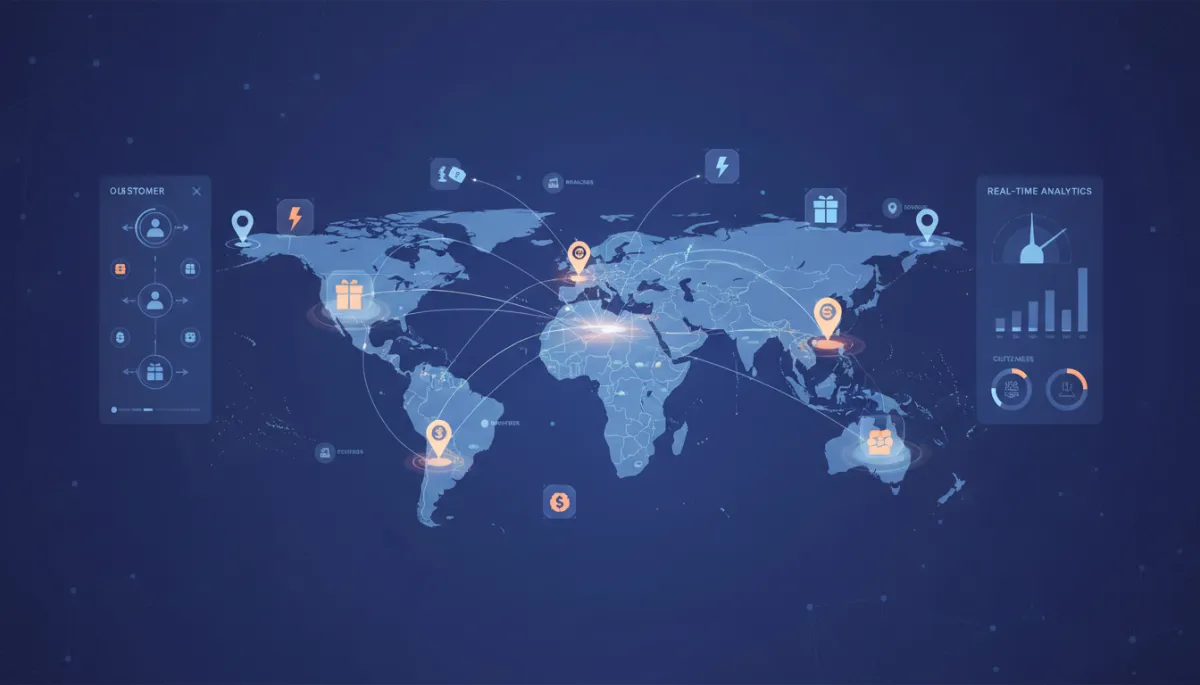
As AI agents become embedded in 40% of enterprise applications by 2026 (Gartner), CRM will broker not just human workflows but machine‑to‑machine decisions: geo‑personalized offers, real‑time pricing, dynamic SLAs, and partner routing based on intent, location, and risk. Semantic SEO and AEO will demand CRMs that expose structured, decision‑grade signals to both search engines and AI retrieval systems.
FAQ: Strategic CRM Decision Engine
Q: What is a CRM decision engine?
A: It is a CRM configured to recommend or automate next-best-actions (who to contact, with what offer, via which channel, when) based on unified data, rules, and AI models.
Q: How is this different from traditional CRM?
A: Traditional CRM is descriptive (what happened); a decision‑engine CRM is prescriptive and predictive (what should happen next, and why).
Q: Where should we start?
A: Start with one high‑value decision (e.g., renewal risk or enterprise lead routing) and design the data, rules, and AI needed to automate or augment it. Then scale the pattern across journeys with support from a partner like LeadMagno or a RevOps-focused digital consultancy.
Q: Which platforms work best for building a decision engine?
A: You can layer decision logic on most modern CRMs, but platforms like HighLevel (with advanced automation tiers) and solutions like MagnoPro make it easier to unify data, automation, and AI in one stack.
Q: How do we avoid overwhelming reps with AI suggestions?
A: Limit the system to 1–2 primary recommendations per record (e.g., “call now” or “send this sequence”) and explain why. Use sandbox environments to test UX with a subset of reps before full rollout.
Q: How do content and social media fit into the decision engine?
A: Decisions are only as strong as the offers and content behind them. A robust engine connects CRM decisions to a centralized content strategy, such as LeadMagno’s content operating system, amplified through systematic social media marketing.
Q: What if our data is messy—can we still start?
A: Yes. Pick one use case where data quality is “good enough” (e.g., opportunities in one region) and build a small decision loop there. Use early wins to justify investment in data cleanup and integrations with tools like annual HighLevel plans and RevOps services.
Q: How do we get leadership buy-in?
A: Frame the initiative as a way to increase revenue per rep and per campaign, not as a tech upgrade. Use benchmarks, a short decision-engine demo, and a 90-day pilot plan to show how CRM decisions can directly impact CAC, LTV, and sales productivity.
Final Strategic Framework: Connect, Decide, Prove, Evolve
To operationalize a CRM Decision Engine, LeadMagno recommends this synthesis: Connect your data fabric; Decide on a small set of revenue‑critical decision points; Prove value with clear metrics (conversion, CAC, LTV, sales productivity); and Evolve via experimentation, governance, and AI refinement. Businesses and agencies that treat CRM as a living decision engine—not a static database—will own the next decade of B2B customer insights and growth.
Next step: If you’re ready to move beyond dashboards and into real-time revenue decisions, explore MagnoPro, test-drive AI-enabled HighLevel, or book a strategy session to design your first decision engine use case.


Facebook
Instagram
X
LinkedIn
Youtube
TikTok