






Lead Magno vs ActiveCampaign: 2026 Agency Showdown
CRM, Marketing Automation, Agency Solutions
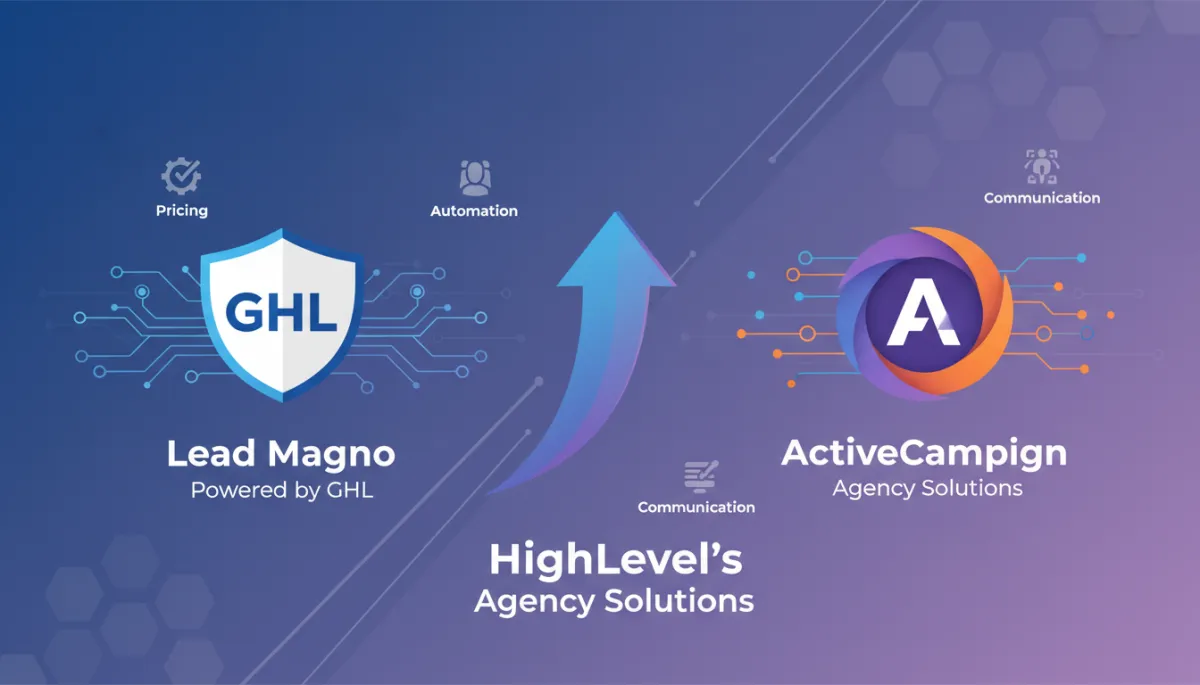
Lead Magno Powered by GHL vs ActiveCampaign, The 2026 Agency Advantage!
Agencies do not have time for duct-taped tech stacks. They need a unified growth engine. This listicle breaks down how Lead Magno, powered by GoHighLevel (GHL), stacks up against ActiveCampaign in 2026, with a clear focus on comparison, marketing automation, agency solutions, pricing, and communication capabilities!
1, Platform Comparison, All‑in‑One Agency Engine vs Point Solution
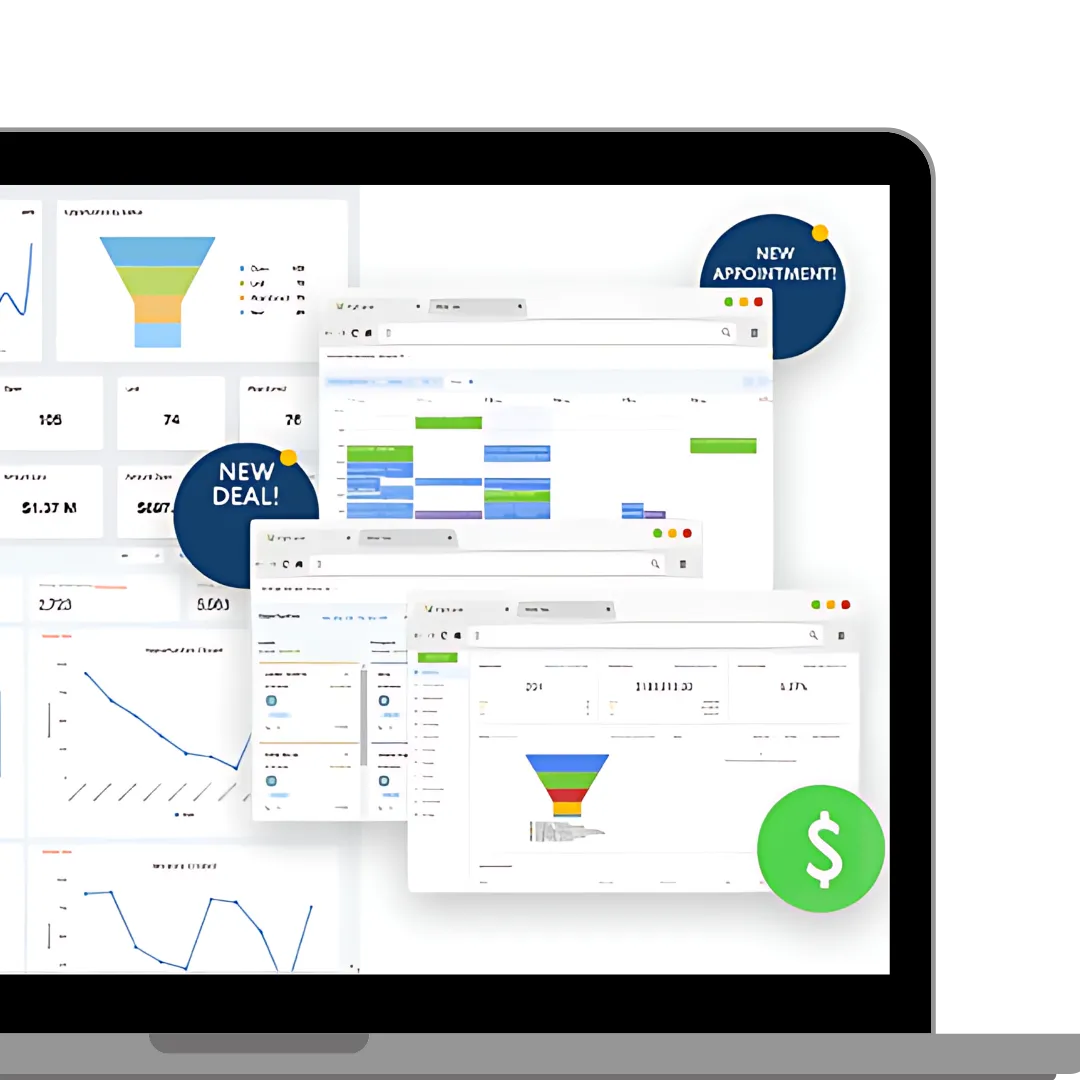
Lead Magno, built on GoHighLevel, operates as an all‑in‑one agency operating system. You get CRM, funnels, forms, calendars, reputation management, automation, and reporting under one login. Data flows cleanly from ad click to closed deal without relying on fragile integrations, drawing on GHL’s unified architecture (leadmagno.com)
ActiveCampaign, by contrast, is a specialized marketing automation and email platform. It excels at campaigns and segmentation, but often requires extra tools for funnels, booking, reviews, and advanced CRM workflows (Technology Evaluation). Agencies frequently bolt on additional software, adding complexity, support overhead, and hidden costs!
📌 Key Takeaway: Choose Lead Magno when you want a single command center for funnels, CRM, and automation, not just a smarter email tool!
2, Marketing Automation, Visual Workflows vs Campaign‑First Logic
Lead Magno leverages GHL’s visual automation builder, giving agencies drag‑and‑drop “if this, then that” workflows, You can trigger emails, SMS, pipeline moves, tags, and internal notifications from events like form fills, funnel steps, or calendar bookings, without writing a line of code (leadmagno.com), Automation is tightly tied to funnels and CRM, so nurture paths reflect the entire customer journey, not just email behavior!
ActiveCampaign remains a campaign‑centric automation platform, It offers sophisticated branching, scoring, and behavioral triggers, and its newer AI suite, Active Intelligence, speeds up campaign building and optimization (ActiveCampaign Year in Review), However, many of these capabilities sit inside email‑first journeys, Agencies still need external tools for full‑funnel visibility!

Agencies win when automation, funnels, and CRM live in one connected system!
3, Agency Solutions, Built‑In Client Delivery vs DIY Assembly
Lead Magno is engineered for agencies and service providers, out of the box. White‑label capability from the GHL backbone, reusable funnel and pipeline templates, client account cloning, and standardized reporting enable you to productize services quickly. The Social Planner ties content scheduling on platforms like Facebook and Instagram directly into funnels and CRM records, making campaign attribution straightforward (tech.leadmagno.com)
ActiveCampaign can be used by agencies, but it is not inherently an agency delivery platform. You often stitch together landing page builders, booking tools, review platforms, and reporting dashboards, then maintain every integration. For multi‑client operations, this fragmentation introduces risk, slows onboarding, and inflates operational costs!
💡 Pro Tip: If your revenue model depends on replicable client setups, Lead Magno’s GHL foundation gives you repeatable, scalable playbooks!
4, Pricing, Predictable All‑in‑One vs Tiered Add‑Ons and Escalating Costs
Lead Magno, powered by GHL, typically follows a flat, all‑in‑one pricing philosophy. Agencies pay for a unified suite that already includes CRM, funnels, forms, calendars, automation, and multi‑channel messaging. This minimizes surprise add‑ons and makes client margin calculations straightforward. Exact tiers vary by reseller packaging, but the model is intentionally predictable for growth‑focused agencies!
ActiveCampaign’s pricing, by contrast, scales aggressively with contact volume and features, At 1,000 contacts on annual billing, plans start around $15 for Lite, $49 for Plus, $79 for Professional, and roughly $145 for Enterprise (sender.net), As lists grow, costs climb, for 25,000 to 50,000 contacts, real‑world bills can reach hundreds or even over $1,000 per month when you factor in CRM, SMS credits, transactional email via Postmark, extra users, and AI upgrades (BusinessEAutomation, iKnowPlus), Agencies must constantly watch margins, contact caps, and hidden overages!
5, Communication Capabilities, True Omnichannel vs Email‑First Plus SMS
Lead Magno capitalizes on GHL’s omnichannel communication stack, Email, SMS, two‑way texting, call tracking, voicemail drops, and pipeline actions are managed from a single timeline, The Social Planner extends communication into organic social channels, linking every post back to funnels and CRM records (tech.leadmagno.com), Agencies gain a unified view of every touchpoint, from first click to final invoice!
ActiveCampaign delivers world‑class email automation and has expanded into SMS with its SMS Inbox, enabling two‑way conversations (ActiveCampaign), However, telephony, call tracking, and advanced conversational routing typically require third‑party tools, Agencies end up splitting communication history across multiple systems, which undermines strategic decision‑making!
6, Final Verdict, Why Agencies Choose Lead Magno Powered by GHL
ActiveCampaign remains a strong choice for businesses that want deep email marketing and AI‑assisted campaigns. Yet for agencies that must onboard clients quickly, standardize delivery, and protect margins, Lead Magno, powered by GHL, offers a more strategic, agency‑first foundation. You gain an all‑in‑one CRM, marketing automation hub, and communication center that scales without forcing you into a maze of add‑ons!
If you are building a serious agency or service business, and you want your tech stack to accelerate growth instead of complicating it, Lead Magno, powered by GHL, is the platform designed with your entire client lifecycle in mind, from the first lead to long‑term retention!
Migration Checklist, Moving from ActiveCampaign to Lead Magno (GHL)
Use this high‑level migration checklist to plan a clean, low‑risk move from ActiveCampaign into Lead Magno’s all‑in‑one agency stack:
1. Audit your current stack – List every tool connected to ActiveCampaign (forms, landing pages, booking, reviews, reporting, telephony) and document what each is doing for your client delivery.
2. Map data and objects – Define how contacts, custom fields, tags, lists, deals, and pipelines in ActiveCampaign will map to contacts, opportunities, pipelines, and custom fields in Lead Magno.
3. Export and clean contacts – Export all contacts and engagement data from ActiveCampaign, dedupe records, normalize naming conventions for tags and lists, and remove obviously inactive or invalid contacts.
4. Rebuild core funnels and forms – Recreate your highest‑value funnels, opt‑in forms, and booking flows inside Lead Magno first, using GHL’s funnel builder and calendars to centralize lead capture.
5. Translate automations – Start with mission‑critical automations (lead nurture, onboarding, renewal, no‑show workflows). Rebuild them in the Lead Magno visual automation builder, aligning triggers with funnel steps and pipeline stages rather than just email events.
6. Configure omnichannel messaging – Set up email, SMS, call tracking, voicemail drops, and the Social Planner in Lead Magno so every touchpoint is logged on a single contact timeline.
7. Run a pilot client – Migrate one internal brand or a friendly client first. Validate deliverability, automation timing, pipeline movement, and reporting before scaling migration to all accounts.
8. Plan a phased cutover – Set a clear date range where new leads and campaigns run exclusively through Lead Magno, while legacy sequences finish in ActiveCampaign. Then fully decommission old automations to avoid double‑sending.
9. Standardize client templates – Once the first migrations are stable, lock in funnel, pipeline, automation, and reporting templates in Lead Magno so every new client can be cloned from a proven, agency‑grade playbook.
📌 Key Takeaway: Treat migration as a chance to simplify and standardize. Moving from ActiveCampaign into Lead Magno is not just a platform swap—it is an opportunity to consolidate tools, tighten processes, and roll out a repeatable agency operating system for every client you serve.
Frequently Asked Questions About Migrating from ActiveCampaign to Lead Magno (GHL)
📌 Key Takeaway: Use this FAQ alongside the migration checklist to reduce uncertainty, set expectations with stakeholders, and keep your cutover plan on track.
1. How long does a typical migration from ActiveCampaign to Lead Magno take?
For most agencies, a structured migration takes 2–6 weeks from initial audit to full cutover, depending on list size, the number of automations, and the number of brands or clients you manage. The checklist above is designed to help you tackle work in phases—starting with one pilot client before rolling it out to the rest of your portfolio.
2. Will I lose historical data like tags, engagement, and deals?
No—if you follow the checklist steps for exporting, cleaning, and mapping data, you can preserve key history. Tags, custom fields, and deal data can be translated into Lead Magno’s contacts, opportunities, and custom fields. Some very granular email metrics may stay in ActiveCampaign exports, but the information you need for segmentation and automation logic can be fully carried over.
3. How do I avoid downtime or double‑sending during the cutover?
Use a phased cutover as outlined in step 8 of the checklist. Set a firm date by which new leads and campaigns will run only through Lead Magno, while existing ActiveCampaign sequences are allowed to finish. Once you confirm everything is firing correctly in Lead Magno, deactivate or archive the old automations in ActiveCampaign to eliminate double‑sending and confusion.
4. What should I prioritize rebuilding first in Lead Magno?
Start with the highest‑impact revenue paths: your core lead‑gen funnels, opt‑in forms, booking flows, and essential nurture/onboarding sequences. Once these are stable, move on to renewal, win‑back, and more advanced automations. This mirrors steps 4 and 5 in the checklist and ensures you protect cash‑flow‑critical journeys first.
5. How does omnichannel messaging change my day‑to‑day operations?
Once you configure email, SMS, call tracking, voicemail drops, and the Social Planner (step 6), your team works from a single contact timeline instead of bouncing between tools. This simplifies follow‑up, improves hand‑offs between sales and service, and gives you clearer attribution when reporting on which touchpoints actually drive revenue.
6. How do I manage multiple clients or brands during migration?
Treat migration as an opportunity to standardize client templates. Run one or two pilot accounts first (step 7), refine your funnels, pipelines, automations, and reports, then lock them into reusable templates (step 9). From there, you can clone proven setups for each new client, rather than reinventing the wheel every time.
7. What common mistakes should agencies avoid when switching from ActiveCampaign?
The biggest pitfalls are rushing the cutover, skipping the initial audit, and trying to migrate every legacy automation one‑to‑one. Instead, audit your stack, clean your data, and rebuild only the workflows that still support your current offers and delivery model. Use the move to Lead Magno to simplify, not to copy and paste complexity into a new platform.


Facebook
Instagram
X
LinkedIn
Youtube
TikTok