





Top Lead Generation Techniques for Small Businesses
Lead Generation, Small Business Growth, Digital Strategy
Top Lead Generation Techniques Every Small Business Should Know
Rising acquisition costs and falling funnel efficiency are reshaping how small businesses win new customers. In 2026, the median B2B cost per lead (CPL) has climbed to roughly $213, while the share of website visitors that become qualified leads remains below 3% in many sectors, and less than 2.5% of visitors typically convert to marketing-qualified leads (MQLs) at all. At the same time, top performers are widening the gap: AI-driven programs and intent-based targeting are generating up to 451% more qualified leads than manual methods, with SEO and content still delivering the highest long-term ROI. This environment rewards businesses that treat lead generation as a connected system—anchored in data, powered by AI, and aligned across marketing, sales, and operations—rather than a set of disconnected campaigns.
What Is Lead Generation for Small Businesses?
Lead generation for small businesses is the structured, repeatable process of attracting, capturing, and qualifying potential customers who have demonstrated intent or interest in your products or services, then moving them into a sales conversation in a measurable, cost-efficient way.
In one line: lead generation is the system that turns anonymous attention into trackable, sales-ready opportunities at a sustainable cost.
Quick Insights: The 2026 Lead Generation Reality Check
SEO remains the lowest-cost channel at around $34 per lead on average, with long-term ROI near 748% and close rates of ~14.6% versus 1.7% for typical outbound leads (searchlab.nl; revnew.com).
AI is now baseline: roughly 61% of B2B teams use AI-powered lead scoring, and AI-based nurturing produces up to 451% more qualified leads than manual programs (digitalapplied.com).
Speed matters: leads contacted within one hour are about seven times more likely to qualify than those contacted after 24 hours, yet slow follow-up remains a major leakage point (digitalapplied.com).
Most leads are not ready to buy: only around 5% of new leads are sales-ready; 95% require structured nurturing before they convert (shno.co).
📌 Key Takeaway: Most companies still optimize for lead volume when they should focus on lead quality, speed to follow-up, and system design.
Strategic Framework: The Small Business Lead Engine
Effective small business lead generation can be structured as a simple but powerful framework with six interconnected pillars:
Attract: Visibility and traffic from SEO, content, social media, and partnerships.
Engage: Interactive and educational experiences (videos, tools, quizzes, webinars) that create real interest.
Capture: Low-friction forms, chatbots, and social commerce flows that collect contact details and context.
Qualify: AI-driven scoring and clear criteria to distinguish high-intent leads from early-stage interest.
Nurture: Email, remarketing, and social touchpoints tailored to buyer stage, not just broadcast promotions.
Convert: Fast, structured follow-up by sales or founders, with clear next steps and qualification questions.
If you want consistent pipeline with lower CPL → design a system across all six pillars, not isolated tactics.
Core Strategies: Top Lead Generation Techniques for 2026
1. SEO and Content as Your Always-On Engine
With SEO leads closing at up to 14.6% and delivering some of the lowest CPLs in the market, search-optimized content remains the foundation of small business lead generation. Content marketing generates around three times more leads at roughly 62% lower cost than outbound approaches (colorlib.com). For service-based businesses and agencies, pairing a robust content marketing strategy with strong technical SEO and local optimization can create a steady flow of high-intent inbound leads.
If you want lower-cost, compounding leads → invest in SEO and thought leadership content before scaling paid ads.
2. AI-Driven Personalization and Lead Scoring
AI tools now power everything from predictive lead scoring to real-time website personalization. Teams using AI-based nurturing report up to 451% more qualified leads, while AI scoring improves prioritization accuracy by around 40% (digitalapplied.com). For small businesses, this does not require complex custom models; modern CRM and marketing automation platforms embed AI that can:
Score leads based on behavior (pages visited, content consumed, email engagement).
Recommend next-best content or offers dynamically on your website or via email.
Trigger outreach sequences when intent thresholds are met.
Most companies optimize for more leads; the leaders optimize for better scoring, faster routing, and deeper personalization.
3. Social Media, Social Commerce, and Community Building
Social channels remain essential, but the emphasis has shifted from vanity metrics to high-intent engagement and direct conversion. Features like Instagram and TikTok shops allow small retailers to sell inside the app, while B2B firms rely on LinkedIn plus email for relationship-driven outreach. A focused social media marketing program can combine:
Short-form educational videos and live streams to demonstrate expertise.
Interactive content such as polls, quizzes, or mini-assessments to capture leads.
Community spaces (groups, private channels) to deepen trust and referrals.
4. Interactive and Utility-Driven Content
Buyers increasingly expect immediate value before sharing details. Tools such as ROI calculators, guided checklists, and diagnostics outperform static gated PDFs. These formats both educate and qualify, surfacing budget, timeline, and fit while positioning your brand as a trusted advisor. Combined with AI chatbots that can answer questions and book meetings 24/7, they create a high-conversion capture layer on top of your traffic.
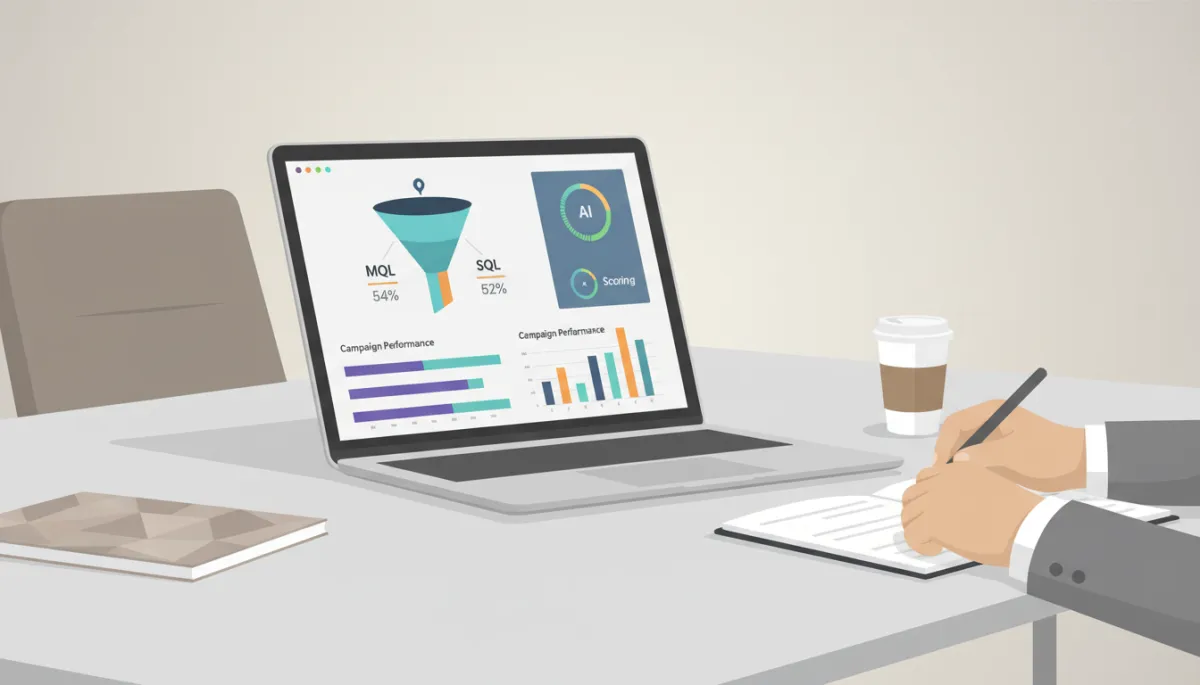
Small teams using dashboards and AI scoring focus on quality, not just volume.
5. Email, Retargeting, and Referral Systems
Email remains one of the highest-ROI channels, returning around $36 for every $1 spent in many benchmarks. When combined with retargeting ads and structured referral programs, it becomes a powerful nurturing engine. Leading small businesses design sequences tailored to buyer stage—awareness, consideration, decision—rather than generic newsletters, and they incentivize existing clients to refer peers with clear, simple offers.
Execution: Turning Strategy into Daily Practice
Execution is where most small businesses struggle—not in knowing tactics, but in sequencing and resourcing them. A digital consultancy such as WeSolve typically helps teams establish a 90-day execution roadmap built around:
Two primary channels (for example, SEO + LinkedIn outreach) to avoid dilution.
One core lead magnet (calculator, assessment, or playbook) aligned to a specific problem and segment.
Defined SLAs for follow-up (for example, respond to all new leads within 60 minutes during business hours).
Weekly performance reviews focused on CPL, MQL→SQL conversion, and time to first contact.
If you want predictable results → commit to one 90-day test cycle with clear metrics instead of changing tactics every few weeks.
Systems: Tools, Automations, and Operating Rhythm
A modern lead generation system for small businesses does not need to be complex, but it must be coherent. At minimum, it should include:
A CRM with lifecycle stages (lead, MQL, SQL, opportunity, customer) and basic AI scoring.
Marketing automation for email sequences, lead nurturing, and simple workflows (for example, notify sales when score > X).
Website analytics and conversion tracking for key forms, chat interactions, and call tracking numbers.
A shared dashboard that surfaces weekly metrics for both marketing and sales.
The operating rhythm—weekly reviews, monthly experiments, and quarterly strategy resets—is as important as the tools themselves. Without a cadence, even the best platforms become underutilized.
Data: What to Measure and How to Decide
In 2026, the most effective small businesses treat data as the steering mechanism for their lead engine. Beyond simple lead counts, focus on:
CPL by channel (SEO, paid search, social, referrals, webinars) and its trend over time.
Conversion rates at each stage: visitor → lead, lead → MQL, MQL → SQL, SQL → opportunity, opportunity → customer.
Lead velocity: how long it takes to move between stages, and where delays occur.
Revenue per channel: pipeline and closed-won revenue attributed to each source, not just form fills.
If you want better decisions → optimize for margin per qualified opportunity, not impressions, clicks, or raw leads.
Risks and Common Failure Patterns
Several recurring risks undermine small business lead generation efforts:
Channel over-dependence: relying on a single paid platform, leaving the pipeline exposed to algorithm or cost changes.
Misalignment between marketing and sales: unclear definitions of MQL and SQL, resulting in low MQL→SQL conversion and friction between teams.
Slow response times: leads waiting more than 24 hours for a reply, significantly reducing qualification odds despite high acquisition costs.
Data privacy and trust gaps: collecting data without transparent consent or value exchange, which can erode trust and damage brand equity.
Most companies optimize for short-term lead spikes; resilient businesses optimize for diversified channels, trust, and strong handoffs.
FAQs: Lead Generation for Small Businesses in 2026
1. What is the most cost-effective lead generation channel for small businesses?
SEO and organic search typically offer the lowest CPL (around $34 per lead) and strong close rates, especially when paired with high-quality content and local optimization. However, effectiveness depends on your market, competition, and execution quality.
2. How should a small business start if resources are limited?
Focus on one inbound channel (often SEO plus educational content) and one outbound or relationship-based channel (for example, LinkedIn outreach or partner referrals). Build a single high-value lead magnet, implement basic CRM tracking, and commit to a 90-day test cycle before expanding.
3. Do small businesses really need AI for lead generation?
While you can generate leads without AI, the data shows a growing performance gap between teams that use AI for scoring and nurturing and those that do not. Modern, affordable tools now embed AI by default, making it practical even for small teams to prioritize high-intent leads and automate repetitive tasks.
4. How long does it take to see results?
Paid campaigns and outbound outreach can generate leads within days or weeks, while SEO and content typically compound over three to six months. Across many B2B funnels, it can take 192–287 days for opportunities to convert to closed-won deals, depending on deal size, so expectations should account for full-cycle timelines (digitalapplied.com).
5. How do we know when to scale a channel?
A channel is ready to scale when you can consistently acquire qualified leads at or below your target CPL, maintain acceptable MQL→SQL and SQL→opportunity conversion rates, and handle the increased volume operationally without degrading response times or customer experience.
Final Strategic Framework: Connecting Systems and Setting Priorities
When viewed as a whole, high-performing small business lead generation in 2026 is less about any single tactic and more about how systems connect. The most effective organizations:
Anchor their engine in organic strength (SEO, content, and community) to reduce long-term CPL and dependence on paid channels.
Layer on AI-enabled qualification and nurturing to focus human effort where it matters most and increase conversion at each stage of the funnel.
Integrate social, email, and referrals into a coherent journey, rather than treating them as separate campaigns or channels.
Use data as a feedback loop, adjusting budgets and tactics based on CPL, conversion, velocity, and revenue contribution—not just impressions or clicks.
If you want a resilient lead engine → prioritize (1) organic visibility, (2) AI-informed qualification, (3) fast, human follow-up, and (4) a disciplined measurement cadence.
For many small businesses and agencies, partnering with a specialist digital consultancy to design and implement this connected system can accelerate outcomes and reduce trial-and-error. Regardless of whether you build in-house or with external support, the mandate is clear: move from isolated tactics to an integrated, data-driven lead generation system that compounds value over time.


Facebook
Instagram
X
LinkedIn
Youtube
TikTok