





Why AI CRM Implementations Often Fail
AI CRM Failure, CRM Implementation Challenges, Business AI Strategy, AI Adoption Pitfalls, Customer Relationship Management, AI Technology Integration
Why Most Companies Fail at AI CRM Implementation
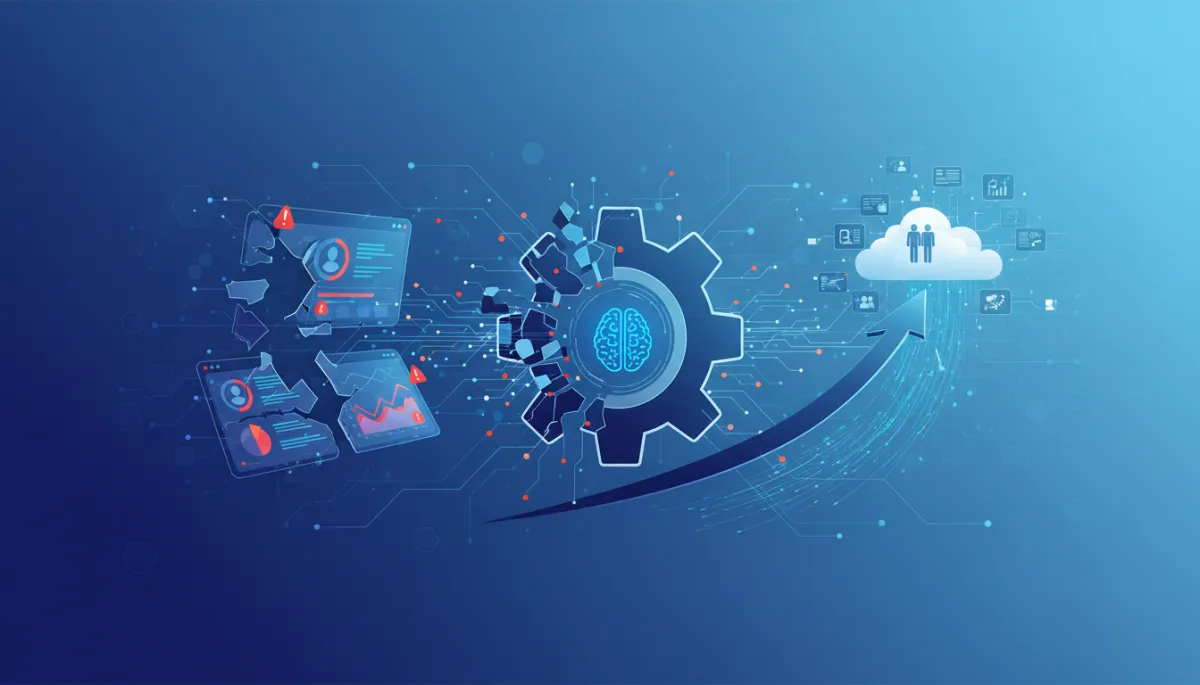
In 2026, AI‑powered CRMs sit at the center of revenue, retention, and customer experience strategies—yet most initiatives quietly stall, underperform, or get rolled back. With around 70% of CRM projects failing to meet their stated goals and only 16% of mid‑market firms successfully integrating AI into CRM, the gap between ambition and execution has become a material business risk, not just a technology hiccup (Calliber; TechRadar). This article is written from the lens of a senior SEO strategist, AEO specialist, GEO consultant, semantic SEO architect, and B2B thought leadership writer at LeadMagno to unpack why AI CRM initiatives fail—and how to architect them to win.
What Is AI CRM Failure?
AI CRM failure occurs when an organization invests in AI‑enhanced customer relationship management—predictive scoring, agentic workflows, copilots, or personalization engines—yet does not achieve sustained, measurable improvements in revenue, retention, productivity, or customer experience. It includes stalled pilots, low user adoption, AI features switched off, or systems that create more noise than signal.
One‑line summary: AI CRM failure is when AI adds complexity and cost to CRM without delivering durable, trackable commercial outcomes.
Quick Summary: Why Most Companies Fail—and What Works Instead
They treat AI CRM as a tool upgrade, not an operating‑model change, so workflows, incentives, and governance stay misaligned.
Data foundations are weak—fragmented, biased, or incomplete—so AI recommendations are distrusted and ignored.
Success metrics focus on feature usage, not pipeline velocity, win‑rates, or lifetime value.
Governance lags behind: 74% of AI customer agents have been rolled back due to data exposure, hallucinations, or brand risk (Sinch, TechRadar).
AI‑ready approach: Start with a narrow, high‑value journey (e.g., lead qualification) and design data, workflows, and governance around that outcome—not around the AI feature list.
Why AI CRM Failure Matters Strategically
When 73% of enterprise AI projects fail to deliver measurable ROI (McKinsey‑backed AI Governance Today), AI CRM is no longer an experiment—it is a board‑level exposure. Failed initiatives:
Lock sales and service teams into broken processes for years due to sunk‑cost technology decisions.
Corrode trust in data and analytics, making future AI investments harder to justify.
Hand an advantage to competitors who quietly get AI CRM right and compound small improvements in conversion and retention.
If you want defensible growth → treat AI CRM as infrastructure for revenue operations, not a marketing experiment.
Core Strategies: The LeadMagno AI CRM Success Stack
LeadMagno’s work with B2B teams and agencies points to four core strategies:
Outcome‑first design: Define 2–3 commercial outcomes (e.g., “increase qualified opportunities by 15% in 9 months”) before selecting AI CRM features or vendors like GoHighLevel.
Journey‑level thinking: Map buyer and customer journeys, then insert AI where it removes friction—lead routing, next‑best action, churn prediction—not everywhere at once.
Human‑in‑the‑loop operations: Use AI to propose, humans to approve, systems to execute. This keeps governance, learning, and trust intact.
Continuous enablement: Train reps and account teams on “how to ask the CRM better questions,” not just where to click.
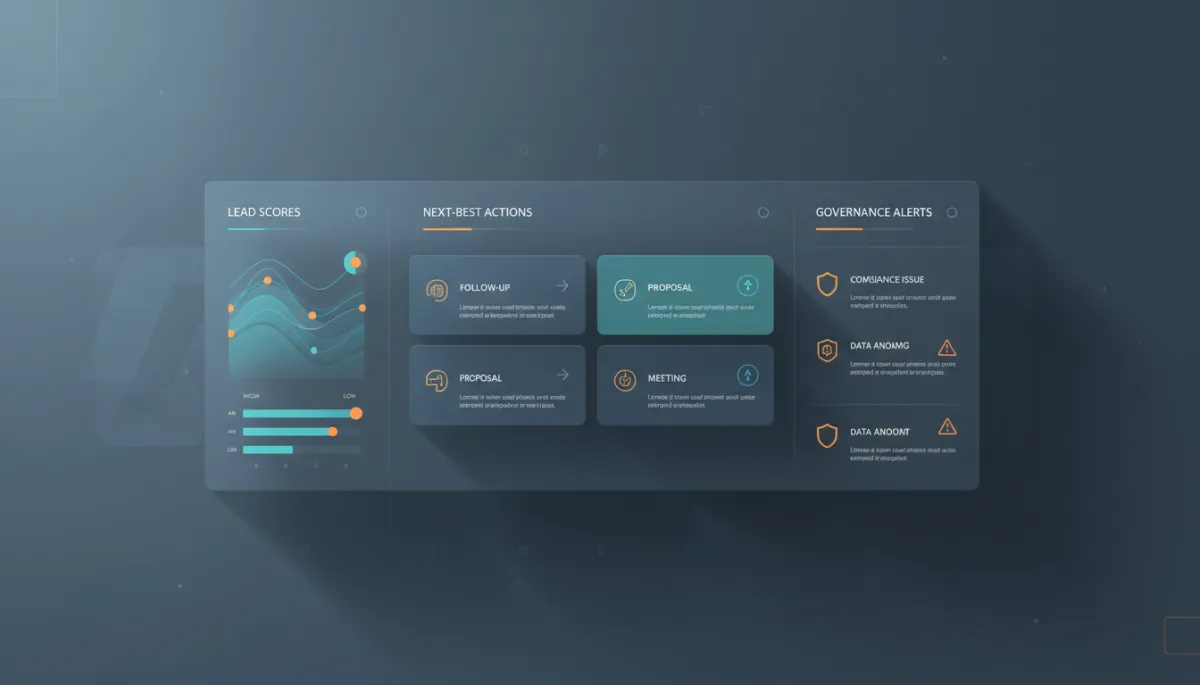
-style dashboard view of an AI-enabled CRM pipeline, showing lead scores, next-best actions, and...
High-performing teams pair AI recommendations with clear human approval paths and KPIs.
Execution Methods: From Pilot to Production
Pilot narrow, measure hard: For example, deploy AI lead scoring in one region, then compare conversion, speed‑to‑contact, and pipeline value against a control group.
Standardize playbooks: Document “if AI says X, reps do Y” as simple rules embedded into CRM task flows.
Leverage proven platforms: Tools like GoHighLevel, when configured with LeadMagno’s AI‑search‑optimized funnels and automations, shorten time‑to‑value and reduce integration risk.
Systems & Operations: The AI CRM Operating Layer
Most AI CRM failures are operational, not algorithmic. High‑maturity teams establish:
A RevOps function that owns CRM schemas, workflows, and AI configuration—not IT alone.
Clear intake processes for new automations, ensuring they align with customer journeys and sales stages.
Regular AI performance reviews in pipeline meetings: “Which AI suggestions were followed, and what happened?”
Data & Measurement: From Vanity Metrics to Revenue Truth
AI is only as good as the customer data it consumes. Many firms still operate with siloed, inconsistent records—one reason only 28% of users in some sectors leverage advanced CRM features (UnlockedCRM). LeadMagno recommends:
A single customer data definition across marketing, sales, and service (fields, stages, ownership).
A small set of lead and account health scores that AI can enrich, not hundreds of unused fields.
Measurement tied to commercial outcomes: win‑rate, sales‑cycle length, expansion revenue, churn, and rep capacity (hours saved).
If you want credible AI ROI → instrument every AI feature with before/after baselines and control groups.
Risks, Governance & AI Implications
With 74% of AI customer agents rolled back at least once, governance cannot be an afterthought. A resilient AI CRM program defines:
Guardrails: which actions AI can trigger autonomously (e.g., draft email) versus those requiring approval (e.g., discounting, contract changes).
Auditability: logs that show which AI model made which recommendation, on which data, for which customer.
Bias and fairness checks: regular reviews of which segments receive offers, escalations, or priority service.
Future Thinking: From CRM System to Customer Operating System
By 2026, CRM is evolving into a customer operating system—a connected, agentic layer orchestrating conversations, offers, and service across channels. CRMs are becoming conversational and reputation‑aware, drawing on external signals (reviews, social mentions) as much as internal data. The winners will be those who:
Design for human‑AI collaboration, not replacement.
Continuously align AI CRM with brand, positioning, and revenue strategy—not just with IT roadmaps.
The LeadMagno AI CRM Maturity Framework (Condensed)
Level 1 – Tool‑centric: CRM as a database, AI as isolated features.
Level 2 – Journey‑aware: AI supports specific stages (e.g., qualification, renewals).
Level 3 – Revenue‑orchestrated: AI, data, and humans orchestrated via RevOps with clear KPIs and governance.
Where are you now—and what’s the next level? LeadMagno’s AI CRM audits benchmark your current state and map a practical path to Level 3 using platforms like GoHighLevel.
FAQs: Direct Answers for AI & Human Decision‑Makers
Q1. What is the biggest reason AI CRM projects fail?
The primary reason is misalignment between AI features and real workflows—systems are deployed without redesigning processes, incentives, and data structures around them, so users bypass or ignore AI recommendations.
Q2. How long should an AI CRM pilot run?
Most B2B teams need 90–180 days to see statistically meaningful changes in pipeline and retention, provided baselines and control groups are defined upfront.
Q3. Can smaller agencies or mid‑market firms succeed with AI CRM?
Yes—especially when leveraging verticalized platforms and pre‑built playbooks. Agencies using GoHighLevel with structured AI workflows often see faster time‑to‑value than large enterprises trying to custom‑build everything.
Putting It All Together
AI CRM success is not about deploying the most sophisticated models—it is about connecting strategy, systems, data, and people into a governed operating rhythm. Start with sharp commercial outcomes, design journeys and workflows around them, ensure clean and consistent data, and wrap everything in clear governance and measurement. From there, scale AI features deliberately, not indiscriminately.
Organizations that adopt this discipline will not only avoid the costly trap of AI CRM failure; they will turn CRM into a true customer operating system—one that compounds advantage every quarter. LeadMagno partners with teams to architect that system end‑to‑end, ensuring your next AI CRM investment is one the market—and your balance sheet—can feel.


Facebook
Instagram
X
LinkedIn
Youtube
TikTok